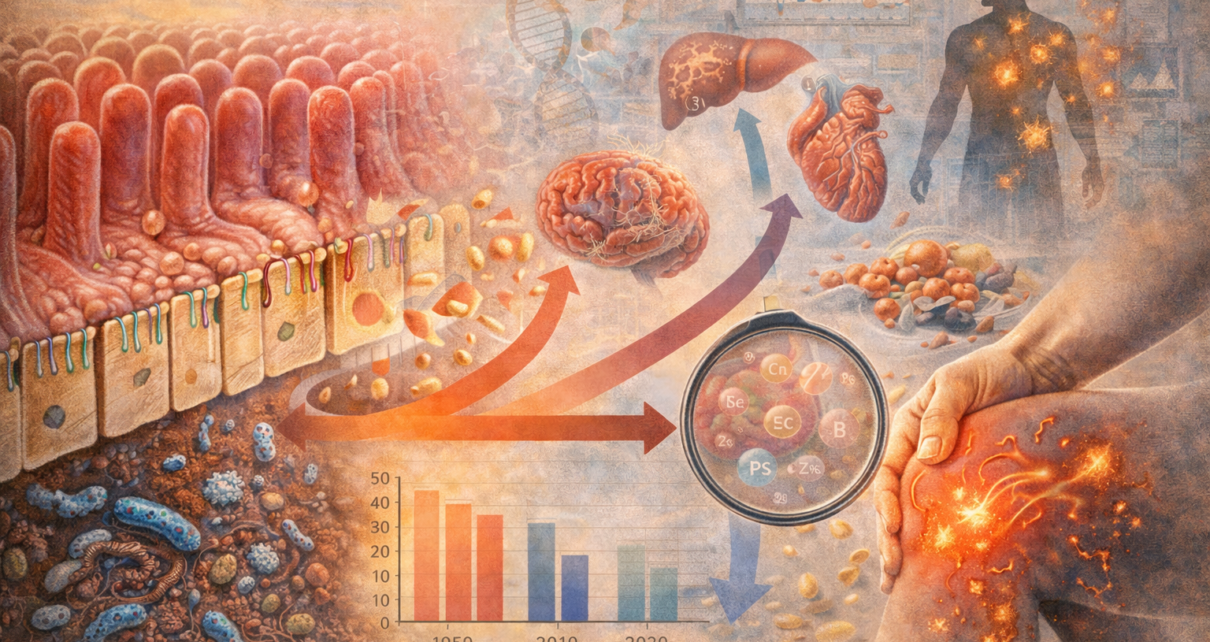
For much of modern medicine, inflammation was viewed as a localized response. Swelling, redness, and pain were understood as targeted reactions to injury or infection. Over time, however, researchers began noticing a different pattern. Many chronic inflammatory conditions appeared without a clear external trigger and often affected multiple systems at once. This shift prompted scientists to look beyond isolated organs and toward interconnected physiological networks. One of the most influential areas of focus to emerge from this research is gut barrier health.
The gut is no longer considered a digestive organ solely. It is now recognized as a central interface between the external environment and the internal immune system. When the integrity of the gut barrier is compromised, inflammatory signals can extend far beyond the gastrointestinal tract, influencing metabolic, immune, and neurological health. Understanding how gut barrier function relates to systemic inflammation has become a defining topic in contemporary gut health research.
What the Gut Barrier Actually Does
The gut barrier is a complex, multilayered system designed to regulate what enters the bloodstream from the digestive tract. It includes the intestinal lining, tight junction proteins between cells, mucus layers, immune cells, and the gut microbiota. Together, these components allow nutrients to pass through while preventing harmful substances such as pathogens, toxins, and undigested food particles from entering circulation.
Under healthy conditions, this barrier is both selective and dynamic. It adapts to dietary inputs, microbial signals, and immune demands. When functioning properly, it supports immune tolerance and prevents unnecessary inflammatory responses.
Problems arise when the barrier becomes overly permeable. This condition is often described in scientific literature as increased intestinal permeability. While the term “leaky gut” is commonly used in popular discourse, researchers prefer more precise language that reflects measurable changes in barrier function.
How Barrier Dysfunction Triggers Inflammation
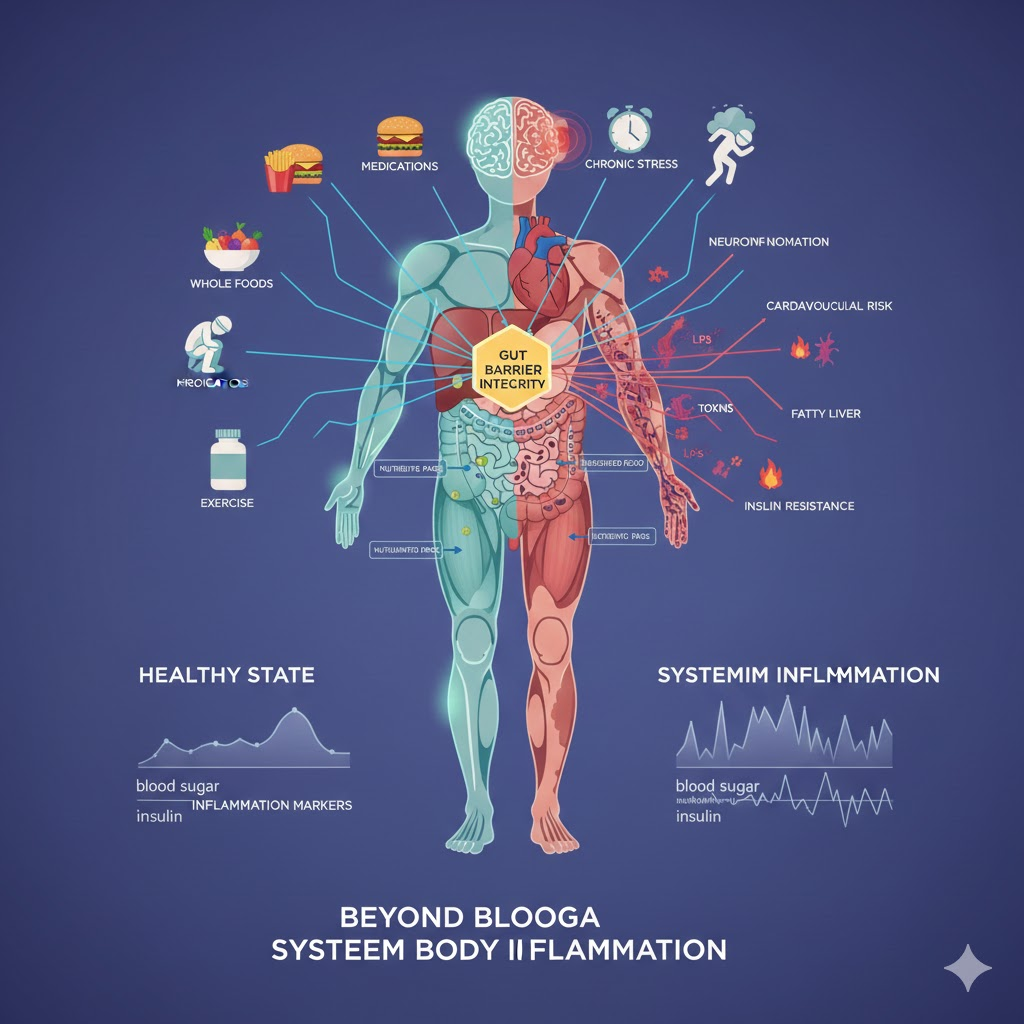
When gut barrier integrity declines, substances that are normally confined to the intestinal lumen can cross into the bloodstream. These may include bacterial fragments such as lipopolysaccharides, partially digested proteins, and other inflammatory triggers.
Once these substances enter circulation, the immune system responds. In the short term, this response may be protective. Over time, however, repeated immune activation can lead to low-grade, chronic inflammation. Unlike acute inflammation, which resolves after a threat passes, chronic inflammation can persist silently and affect multiple organ systems.
Research summarized by the National Institutes of Health highlights that increased intestinal permeability is associated with conditions such as insulin resistance, autoimmune disorders, cardiovascular disease, and neuroinflammation. This suggests that gut barrier dysfunction may act as an upstream contributor rather than a downstream consequence of disease.
Modern Lifestyle Factors That Weaken the Gut Barrier
The rise in systemic inflammation parallels several lifestyle changes common in industrialized societies. Diet composition, medication use, stress exposure, and sleep disruption all influence gut barrier health.
Highly processed foods, particularly those rich in refined carbohydrates, industrial seed oils, and additives, have been shown to alter gut microbiota composition and impair tight junction integrity. Emulsifiers and certain preservatives may disrupt the mucus layer that protects the intestinal lining.
Medications also play a role. Nonsteroidal anti-inflammatory drugs and certain antibiotics can damage the gut lining or reduce beneficial microbial populations. While these drugs are often necessary, their long-term impact on barrier integrity is increasingly recognized in clinical research.
Chronic psychological stress further compounds the issue. Stress hormones such as cortisol can alter gut motility and immune signaling, increasing permeability. Studies reviewed by Harvard Health Publishing note that stress-induced gut changes may help explain the connection between emotional strain and inflammatory conditions.
The Gut Microbiome and Barrier Support
The gut microbiome is deeply intertwined with barrier function. Beneficial bacteria produce short-chain fatty acids, particularly butyrate, which serve as a primary energy source for intestinal cells and help maintain tight junction integrity.
When microbial diversity declines, butyrate production often falls. This weakens the epithelial lining and increases susceptibility to inflammatory infiltration. Diets low in fermentable fibers and high in ultra-processed foods are consistently linked to reduced microbial diversity.
Conversely, diets rich in whole foods, fermentable fibers, and naturally occurring phytonutrients support microbial ecosystems that reinforce the gut barrier. This relationship underscores why gut health cannot be reduced to probiotics alone. The environment those microbes inhabit matters just as much as the organisms themselves.
Systemic Inflammation Beyond the Gut
One of the most significant implications of impaired gut barrier health is its influence on distant organs. Inflammatory molecules originating in the gut can travel through the circulation and interact with tissues far removed from digestion.
In metabolic health, this process has been linked to insulin resistance and fatty liver development. In immune health, it may contribute to autoimmune activation. In neurological research, scientists are increasingly examining how gut-derived inflammation affects the brain through immune signaling pathways and the vagus nerve.
Understanding of metabolic and inflammatory health is shifting, with the gut increasingly recognized as a foundational, systemic regulator rather than an isolated organ. This change in perspective, often reflected in resources like those available on Dr. Berg’s website, represents a broader re-conceptualization of chronic disease across various medical fields.
Nutrition and Barrier Repair
Nutrition plays a central role in maintaining and restoring gut barrier integrity. Certain nutrients are particularly important for epithelial repair and immune regulation. These include zinc, glutamine, omega-3 fatty acids, and fat-soluble vitamins.
Micronutrient sufficiency is essential because intestinal cells have high turnover rates and require constant support for regeneration. When nutrient intake is inadequate, barrier repair processes may lag behind ongoing damage.
Dietary patterns that minimize inflammatory triggers while providing nutrient-dense foods appear most supportive of gut barrier health. This approach aligns with growing interest in low-inflammatory dietary strategies that emphasize whole foods and reduce glycemic volatility.
Rethinking Inflammation as a Systemic Signal
The connection between gut barrier dysfunction and systemic inflammation challenges older models of disease that focus narrowly on affected organs. Instead, inflammation increasingly appears as a signal of network imbalance.
From this perspective, addressing inflammation requires identifying upstream contributors rather than suppressing symptoms alone. Improving gut barrier health becomes a foundational intervention rather than a complementary one.
This shift does not negate the value of targeted therapies. Rather, it reframes them within a broader physiological context where barrier integrity, immune tolerance, and metabolic flexibility are interdependent.
A Growing Area of Research and Public Interest
Interest in gut barrier health has expanded rapidly in both scientific literature and public discourse. While popular narratives sometimes oversimplify the concept, the underlying science continues to evolve in a more nuanced direction.
Researchers are now exploring personalized approaches that account for genetic variation, microbiome composition, and environmental exposures. This complexity reinforces the idea that gut health is not a one-size-fits-all concept but a dynamic process influenced by multiple systems.
As more data emerges, the gut barrier is likely to remain a central focus in discussions about chronic inflammation, preventive health, and long-term resilience.
Looking Ahead
The gut barrier represents more than a physical boundary. It is a regulatory interface that determines how the body interprets and responds to its environment. When this interface is compromised, inflammation can spread beyond its original context and become systemic.
Understanding gut barrier health offers a framework for connecting diet, lifestyle, immunity, and chronic disease risk into a single coherent model. In doing so, it moves the conversation away from isolated symptoms and toward integrated health strategies.
As nutrition science and gut research continue to converge, the role of barrier integrity in systemic inflammation is likely to shape future approaches to prevention and treatment. Rather than viewing inflammation as an enemy to suppress, the emerging view suggests it is a message worth understanding, one that often begins at the gut lining itself.