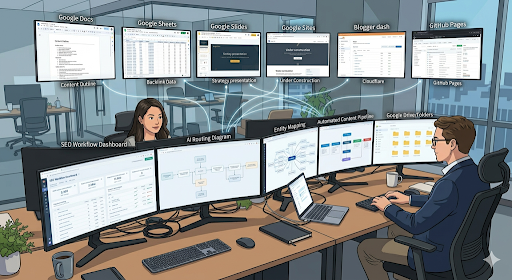
Search visibility has become increasingly difficult for businesses and agencies navigating constant algorithm changes, rising agency retainers, and the growing demand for consistent content production. Many SEO teams are also balancing the pressure to scale deliverables without relying on repetitive manual workflows or low-quality AI-generated content. G-Stacker positions itself as an Autonomous SEO Property Stacking platform designed to automate the creation of interconnected authority properties around a target keyword. The platform combines AI-driven research, structured content generation, and interlinked Google properties as part of a scalable SEO automation approach intended to streamline production workflows. Rather than focusing on thin content generation, the system is designed around repeatable SEO infrastructure, centralized organization, and workflow consistency for agencies and businesses managing ongoing authority-building campaigns.
Property stacking refers to the process of building and connecting multiple web properties to support a central brand, website, or topic. G-Stacker describes this approach through its “Authority Ecosystem,” which combines interconnected Google properties, supporting cloud-based assets, and structured content workflows into a unified system. The platform automates much of the setup process through one-click deployment features that organize and publish supporting properties across different platforms. According to the platform, these interconnected assets are structured to help search engines and AI-driven indexing systems better understand topical relationships, brand entities, and supporting subject matter. The system is designed to centralize content organization while maintaining a repeatable framework for ongoing authority development and content expansion.
Entity Association
G-Stacker structures connected properties around a central brand entity to help reinforce consistency across indexed web assets. The platform references alignment with structured data and entity-based search concepts connected to Google’s Knowledge Graph systems.
Topical Clustering
The platform organizes long-form supporting content into related topic groups designed to establish broader contextual relevance around a target niche. Supporting properties are used to expand coverage across related subject areas.
Interlink Architecture
The ecosystem uses interconnected properties and supporting pages to create a structured flow of relevance between assets. Internal relationships between properties are organized systematically to support content discoverability and indexing.
A G-Stacker stack combines several web properties and publishing environments into a connected authority framework. Google Workspace assets such as Docs, Sheets, Slides, Calendar, and Drive are used as supporting content and organizational layers within the ecosystem. Google Sites functions as a central hub that connects related properties, while Blogger posts provide additional publishing surfaces for topical content.
The platform also incorporates infrastructure tools such as Cloudflare and GitHub Pages to expand the network beyond Google-owned properties. According to G-Stacker, these components are interconnected through automated workflows that organize content deployment, property relationships, and supporting authority signals across the stack. The overall structure is designed to centralize management while maintaining consistency between assets.
G-Stacker is an SEO automation platform built around a patent-pending framework for Autonomous SEO Property Stacking. According to the platform, its system combines structured publishing workflows, interconnected authority properties, and AI-assisted content generation into a centralized operational environment. The platform utilizes multiple large language models (LLMs) assigned to different functions within the workflow, including topic research, content writing, contextual organization, and supporting data analysis. G-Stacker describes this multi-model approach as part of its content automation platform architecture, where AI systems are routed according to the task being performed rather than relying on a single model for all processes. The platform also integrates workflow automation systems intended to coordinate property generation, content deployment, structured interlinking, and supporting SEO infrastructure across different publishing environments.
G-Stacker includes several content generation and research functions designed to organize SEO publishing workflows within its platform. According to the website, the system can analyze existing website content to establish reference points for tone, terminology, and subject alignment when generating supporting materials. The platform also incorporates competitor and intent analysis features that review ranking environments and related search topics as part of its research process.
The system includes structured content components such as FAQ schema integration and supporting metadata organization intended for search engine indexing. G-Stacker also references automated entity mapping, topical clustering, and property relationship management within its publishing process. These features are combined with workflow controls that organize how content, supporting assets, and authority properties are generated and connected throughout the stack ecosystem.
According to G-Stacker, each generated stack can include long-form articles exceeding 2,000 words alongside multiple interconnected authority properties. The platform states that a standard stack structure contains 11 linked properties designed to function together within the broader ecosystem. These may include Google Workspace assets, Google Sites, Blogger pages, and supporting cloud-hosted properties.
The platform also references enterprise-focused infrastructure practices related to account security and data handling. G-Stacker states that it utilizes Google OAuth authentication processes and infrastructure aligned with SOC 2 compliance standards. According to the published information, generated content is not permanently stored after processing within the system. The platform positions these operational specifications as part of its structured publishing and automation environment used to organize property deployment, authority connections, and content workflows across multiple web properties.
Initialization and Keyword Setup
The G-Stacker workflow begins with project setup, keyword selection, and topical configuration within the platform dashboard. Users organize target topics, supporting terms, and related entity information before generation begins.
Generation and AI Routing
According to the platform, G-Stacker routes different tasks through multiple AI models depending on the function being performed. Research-focused models are used for topical analysis and contextual organization, while separate models assist with content drafting, entity structuring, and supporting property generation. The system also organizes metadata, schema elements, and interlinking relationships during the process.
Deployment and Drive Organization
Once generated, the stack is deployed across interconnected properties and organized within Google Drive structures. The platform automates property creation, folder organization, and asset connections between Google Workspace properties, publishing environments, and cloud-hosted components.
G-Stacker is positioned for a range of users managing structured SEO publishing and authority-building workflows. For small businesses and local SEO campaigns, the platform is used to organize interconnected web properties around business entities, locations, and service-related topics. The structured property system is designed to centralize supporting content and related assets within a unified framework.
Marketing agencies may use the platform as part of white-label SEO operations and multi-client workflow management. The website references centralized organization tools, repeatable deployment systems, and automated property generation processes intended for teams handling larger publishing volumes across multiple brands.
SEO professionals and consultants may also use the platform to coordinate topical research, structured interlinking, and AI-assisted content workflows within broader search visibility strategies. G-Stacker’s published materials position the platform as an operational environment focused on property stacking, entity organization, and automated publishing infrastructure rather than standalone content production alone.
G-Stacker positions its platform around structured authority development through interconnected web properties rather than duplicate-content publishing workflows. The platform references entity-based organization, topical clustering, and interconnected property structures intended to support broader search indexing and contextual relevance. Published materials also reference compatibility with evolving AI-driven search environments, including systems associated with AI Overviews, conversational search tools, and answer-focused indexing models.
The platform’s workflow structure is designed to centralize publishing operations, property deployment, and content organization across multiple connected assets. According to the website, its SEO workflow automation framework combines AI-assisted generation, automated deployment, and organized property management into a repeatable operational process intended for agencies, consultants, and businesses managing larger-scale publishing environments.
G-Stacker includes system integration features designed to support multi-brand SEO operations and workflow automation. According to the platform, users can manage separate brand profiles, design structures, and content environments within a centralized dashboard. The system also references REST API functionality intended for automation workflows and external integrations. Published materials describe the ability to organize distinct publishing configurations, property structures, and visual frameworks for different projects or client accounts. These integrations are positioned as part of the platform’s operational infrastructure for coordinating property generation, AI-assisted workflows, content deployment, and stack management across multiple brands and publishing environments.
How does G-Stacker organize generated properties after deployment?
According to the platform, generated assets are organized through connected Google Drive structures that group related Docs, Sheets, Slides, Sites, and supporting files into centralized folders for management and publishing coordination.
What is the role of multi-model AI routing within the platform?
G-Stacker states that different AI models are assigned to specialized functions such as research, content drafting, contextual analysis, and supporting data tasks rather than relying on a single model across the entire workflow.
How does the platform handle brand separation for agencies managing multiple clients?
The platform references individual brand environments with separate design systems, property structures, and publishing configurations intended for agencies or teams handling multiple brands within one operational dashboard.
Why does G-Stacker include cloud-hosted properties alongside Google assets?
According to the website, cloud-hosted properties such as Cloudflare Pages and GitHub Pages are integrated into the ecosystem to expand the supporting authority structure beyond Google-owned publishing environments.
How does FAQ schema integration fit into the publishing workflow?
The platform includes FAQ schema generation as part of its structured content process. This allows generated pages and supporting content assets to include machine-readable question-and-answer formatting for indexing systems.
What is the impact of automated interlink architecture inside a stack?
G-Stacker describes interlink architecture as a structured relationship system between generated properties. The platform organizes connections between assets to maintain topical associations and supporting content pathways across the ecosystem.
How does the REST API support workflow automation?
The platform references REST API functionality for integrating external systems, automating publishing workflows, and coordinating stack management processes across multiple projects, brands, and operational environments.
As search ecosystems continue shifting toward entity recognition, contextual indexing, and AI-assisted discovery systems, many businesses and agencies are reevaluating how supporting content and authority structures are organized at scale. G-Stacker presents an operational framework centered around interconnected digital properties, automated publishing workflows, and AI-assisted content systems designed to coordinate these processes within a single environment. The platform’s published materials outline an approach focused on structured organization, property relationships, and repeatable deployment workflows across multiple web assets. Through integrations involving Google Workspace properties, cloud-hosted infrastructure, and multi-model AI routing, G-Stacker positions its system as part of the broader movement toward automated SEO infrastructure and entity-based search organization. Additional technical information, platform specifications, and workflow documentation are available through the company’s published resources and product documentation.