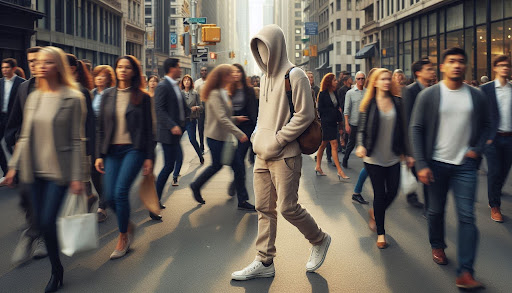
Former security professionals say the safest traveler is not invisible but ordinary enough to avoid unnecessary attention, prepared enough, and disciplined enough to move through foreign cities without advertising wealth, confusion, or vulnerability.
WASHINGTON, DC.
The new luxury in global travel is not always the front-row seat, the designer luggage, the visible security escort, or the five-star lobby entrance, because for many high-profile travelers, the real privilege is moving through a city without being noticed.
The “gray man” concept, borrowed from security culture and adapted for modern tourism, is not about deception, criminal concealment, or hiding from lawful authorities; it is about reducing unnecessary attention through clothing, behavior, movement, technological discipline, and situational awareness.
For executives, journalists, family offices, litigants, celebrities, political figures, and privacy-conscious travelers, blending in has become a practical safety strategy as smartphones, social media, facial recognition, street crime, data brokers, and opportunistic targeting make visibility more dangerous than ever.
The gray man is not invisible because invisibility attracts suspicion.
The central mistake many travelers make is thinking that low profile means looking mysterious, tactical, secretive, or deliberately hidden, when that kind of performance can attract exactly the attention the traveler hoped to avoid.
The real gray man looks contextually ordinary, meaning the traveler appears appropriate for the city, neighborhood, weather, time of day, and social setting without standing out through wealth, fear, confusion, or exaggerated caution.
In a business district, that may mean quiet professional clothing, practical shoes, a normal bag, and controlled movement, while in a beach town, it may mean simple resort wear that does not display expensive watches, branded accessories, or luxury travel signals.
The goal is not to look poor, because trying too hard to look poor can appear staged, but to look unremarkable enough that strangers have no reason to remember the traveler after passing them.
A traveler who blends in well does not disappear from law, hotel registration, border control, or legitimate identity systems because they simply avoid becoming an unnecessary target in public space.
The wardrobe is the first signal strangers read.
Clothing communicates nationality, wealth, confidence, occupation, cultural awareness, and vulnerability before a traveler says a single word, which is why wardrobe planning is central to gray man tourism.
The safest travel wardrobe is usually neutral, practical, climate-appropriate, locally aware, and free from aggressive logos, political slogans, military styling, luxury branding, bright tourist gear, or expensive jewelry that turns the wearer into a walking profile.
Security professionals often advise travelers to research local norms before packing, because clothing that looks modest and ordinary in one city may look strange, disrespectful, or conspicuously foreign in another.
A traveler in Rome, Dubai, Mexico City, London, Bangkok, or Bogotá should not dress from a fantasy of travel, because the safest look is shaped by what competent locals actually wear in that specific environment.
The U.S. State Department’s international travel checklist encourages travelers to research destinations before departure, and that same discipline should extend beyond visas and vaccines into dress, neighborhood behavior, local transport norms, and public safety expectations.
Footwear often reveals the tourist before the passport does.
Shoes are one of the clearest tells because travelers often choose footwear for airport comfort, photography, or brand identity rather than the city streets they will actually walk.
New white sneakers, expensive designer shoes, tactical boots, beach sandals in formal districts, or hiking shoes in urban restaurants can signal that a traveler is unfamiliar with the setting.
The gray man traveler chooses shoes that match the local environment, allow fast walking without looking ready for combat, and do not suggest luxury, vulnerability, or confusion.
Practical footwear also reduces risk because the traveler who can move comfortably through stairs, cobblestones, transit platforms, rain, and crowded sidewalks is less likely to look lost or become physically vulnerable.
The best travel shoes are rarely the most expensive item in the bag, because they are the pair that allows the traveler to move normally without announcing that the city is new to them.
Bags and luggage can advertise wealth faster than clothing.
Luxury luggage, oversized camera bags, monogrammed totes, flashy backpacks, and expensive laptop cases often reveal more about a traveler’s value than the traveler realizes.
A gray man bag should be functional, common in the destination, easy to control in crowds, and free from obvious luxury markers that suggest electronics, cash, passports, jewelry, or business equipment inside.
Cross-body bags, simple daypacks, understated laptop sleeves, and locally common carry styles usually outperform high-end travel gear that makes the owner look like a profitable target.
The bag should also support movement because a traveler constantly adjusting straps, searching pockets, checking zippers, or guarding a luxury purse sends a visible signal of anxiety and value.
The safest bag is the one that carries what is needed, looks ordinary where it is used, and does not make the traveler’s net worth appear higher than the surrounding crowd.
Body language matters more than disguise.
Many tourists become visible not through clothes but through posture, because they stop suddenly, block sidewalks, stare upward, overcheck phones, handle maps awkwardly, or display uncertainty in ways that attract attention.
The gray man traveler moves with calm purpose, even when unsure, by stepping aside before checking directions, using reflections and natural pauses to orient, and avoiding the frozen look of someone who has lost control of the moment.
Confidence should not become arrogance, because aggressive posture can create social conflict, but a traveler who appears calm, aware, and unhurried is less likely to be selected as an easy mark.
Walking speed should match the environment because moving too slowly in a commuter district or too quickly in a relaxed neighborhood can make the traveler appear out of rhythm.
Blending in is often a matter of rhythm, not costume, because people notice the person whose movement does not match the room.
The voice can betray the traveler before the face does.
Loud conversations, public video calls, complaints about prices, visible arguments with staff, and discussions of hotels, wealth, business meetings, room numbers, or travel plans can expose far more than clothing.
The gray man traveler lowers volume, avoids broadcasting nationality or itinerary, and treats public places as shared spaces where strangers can listen even when they appear uninterested.
This is especially important in airports, taxis, cafés, hotel lobbies, elevators, and restaurant entrances, where opportunists may listen for names, destinations, family details, meeting plans, or signs of wealth.
A traveler does not need to whisper or act suspiciously, because the goal is simply to avoid turning private logistics into public information.
The less a stranger knows after standing beside the traveler for five minutes, the better the traveler has managed exposure.
Technology has become the loudest clothing a traveler wears.
A phone held constantly in the hand, a visible smartwatch, wireless earbuds, camera gear, map apps, translation screens, and photo behavior can make a traveler stand out even when the wardrobe is perfect.
The gray man traveler uses technology discreetly, checking maps before leaving a building, saving offline directions, using a travel phone when appropriate, and avoiding constant public screen exposure in crowded areas.
Photographs should be taken with awareness because filming strangers, police, checkpoints, religious sites, private homes, or sensitive infrastructure can create conflict, suspicion, or unwanted attention.
Travelers should also review phone settings, because location sharing, public posts, hotel check-ins, Bluetooth visibility, and visible notifications can expose a location faster than any hotel clerk or taxi driver.
For travelers needing broader personal security, anonymous living strategies can connect device discipline, accommodation privacy, transport planning, and public exposure control into a lawful travel-security structure.
Local research is the difference between blending in and guessing badly.
A traveler cannot blend into a place they have not studied, because local norms shape everything from clothing and tipping to eye contact, public transport behavior, greetings, dining hours, neighborhood boundaries, and personal space.
Official resources such as the State Department’s Overseas Security Advisory Council, which provides country security information for organizations operating abroad, show how destination-specific risk can vary widely even inside the same region.
The gray man traveler reviews crime patterns, protest locations, common scams, transportation risks, neighborhoods to avoid, local dress expectations, and emergency contacts before arriving.
That research should be practical rather than paranoid, because the goal is to understand the environment well enough that ordinary decisions do not look improvised.
A person who knows the city’s rhythm before arrival is less likely to stand at the curb with luggage, phone, cash, and uncertainty all visible at once.
The gray man avoids becoming the richest-looking person in the immediate area.
Criminal targeting is often opportunistic, and the traveler who visibly carries the highest-value phone, watch, bag, jewelry, camera, or shopping package in a crowd can become the easiest choice.
This does not mean wealthy travelers must dress carelessly, because poor presentation can create other problems in business or hospitality environments, but it does mean visible luxury should be controlled by context.
An expensive watch may be normal in a private banking office, yet reckless in a crowded street market where petty theft is common, and visitors are already watched.
The same traveler may need different visibility profiles across airport, hotel, meeting, restaurant, nightlife, and transit environments.
Gray man tourism is flexible, because it asks what level of visibility is appropriate for this place, at this hour, among these people, with this threat profile.
Transport choices can expose more than the destination.
A traveler who steps from an obvious luxury car, negotiates loudly with drivers, displays cash at curbside, or appears confused at transit entrances may become memorable before reaching the hotel.
Transportation planning should match both risk and setting, because a secure car may be appropriate for a high-threat executive, while a discreet licensed taxi, hotel-arranged vehicle, or ordinary ride may be safer for someone avoiding spectacle.
The traveler should avoid sharing too much with drivers, including full itinerary, wealth profile, family details, security concerns, or business purpose.
Arrival and departure points should be chosen carefully because some hotels, restaurants, and venues have secondary entrances, controlled parking, or quieter drop-off zones that reduce public exposure.
The safest transport plan is not always the most luxurious, because it is the one that moves the traveler with the least unnecessary attention.
Tourist behavior is often more visible than tourist appearance.
Standing in the middle of a sidewalk to film, opening a large paper map, wearing branded tour badges, carrying multiple shopping bags, or arguing with vendors can mark a person as unfamiliar and distracted.
The gray man traveler still enjoys the destination, but does so with controlled behavior, stepping aside to orient, keeping valuables secured, asking questions discreetly, and avoiding public displays of confusion or frustration.
Tourist photography is not forbidden, but constant filming can make the traveler look distracted and wealthy, especially when expensive equipment is visible.
Shopping should be handled carefully because luxury bags can create a visible trail from boutique to street, and expensive purchases should not be carried through crowded public areas longer than necessary.
The best tourist blends enjoyment with awareness, because the safest traveler can appreciate a place without exposing vulnerability.
Hotel and accommodation choices affect street visibility.
A traveler who stays in the most obvious luxury hotel may benefit from professional security, but may also become part of a predictable ecosystem of paparazzi, touts, scammers, escorts, thieves, and drivers who know wealthy guests are present.
A more discreet property, serviced apartment, private villa, or boutique hotel may reduce lobby exposure, but can also create other risks if staff is poorly vetted, access control is weak, or emergency support is limited.
The lodging decision should be made according to threat profile, not aesthetics, because a beautiful hidden property can be unsafe if it lacks secure transport, reliable staff, controlled entry, and emergency planning.
For individuals needing a lawful privacy reset that includes residence, travel, documents, and security planning, new legal identity planning can support continuity without relying on false names, forged documents, or evasive conduct.
The gray man does not simply book a room because they plan how they will enter, exit, pay, communicate, and avoid turning the stay into a public map.
Money should be accessible without being visible.
Cash, prepaid cards, and primary payment cards each have advantages, but the traveler who exposes a thick wallet, counts bills publicly, or struggles with payment systems invites unnecessary attention.
A gray man payment strategy uses small, accessible cash for routine purchases, a separate reserve kept secure, controlled card exposure, and emergency backup funds that do not require public improvisation.
The traveler should understand local payment norms because cash may be ordinary in one market and unusual in another, while card-only assumptions can create friction in places where small cash transactions remain normal.
Receipts, exchange records, and lawful source-of-funds documentation should be preserved when carrying significant currency, because privacy should never be confused with the inability to explain money.
Financial discretion works best when the traveler can pay smoothly, leave quickly, and avoid public displays of wealth or confusion.
The safest traveler respects local law and local authority.
Blending in should never mean evading police, bypassing security, avoiding border inspection, using false identity, ignoring local rules, or carrying items that create legal risk.
A gray man strategy is lawful because it is about reducing unnecessary attention in public, not hiding from legitimate authorities or defeating required identity checks.
Travelers should carry valid documents, understand visa conditions, follow local laws, respect photography restrictions, and cooperate calmly with lawful security procedures.
A person who appears evasive near police, borders, airports, government buildings, or sensitive infrastructure may draw more attention than a person who is simply prepared and polite.
Privacy survives best when the traveler is compliant, because lawful low visibility is stronger than suspicious secrecy.
The psychological tactic is emotional control.
Former security professionals often emphasize that fear is visible because anxious travelers scan too aggressively, clutch belongings, overreact to strangers, speak sharply, or make sudden movements that draw attention.
The gray man traveler practices emotional control by slowing decisions, using calm speech, maintaining awareness without staring, and avoiding the appearance of panic even when something goes wrong.
That does not mean ignoring danger, because it means responding deliberately, moving to safer areas, entering legitimate businesses, contacting trusted support, and avoiding impulsive confrontation.
A traveler who can absorb small disruptions quietly is harder to manipulate because scammers, thieves, and aggressive strangers often test emotional reactivity before escalating.
Calm is not weakness, because calm is often the first layer of security.
The final lesson is that blending in is preparation, not performance.
The gray man guide to tourism is not about becoming invisible, because true invisibility is impossible in a world of passports, cameras, payments, hotels, phones, and border records.
It is about becoming less interesting to the wrong people while remaining truthful to the right institutions, including border authorities, banks, hotels, airlines, insurers, and legitimate security personnel.
The safest traveler dresses for context, moves with rhythm, controls technology, limits public speech, plans transport, protects money, researches local norms, and avoids turning privacy into theatrical secrecy.
In 2026, blending in anywhere in the world means understanding that every city has its own visual language, and the traveler who refuses to learn that language becomes visible before they ever open their mouth.
The gray man does not vanish from the world because they simply pass through it with fewer signals, fewer mistakes, and fewer reasons for strangers to remember them after they are gone.


