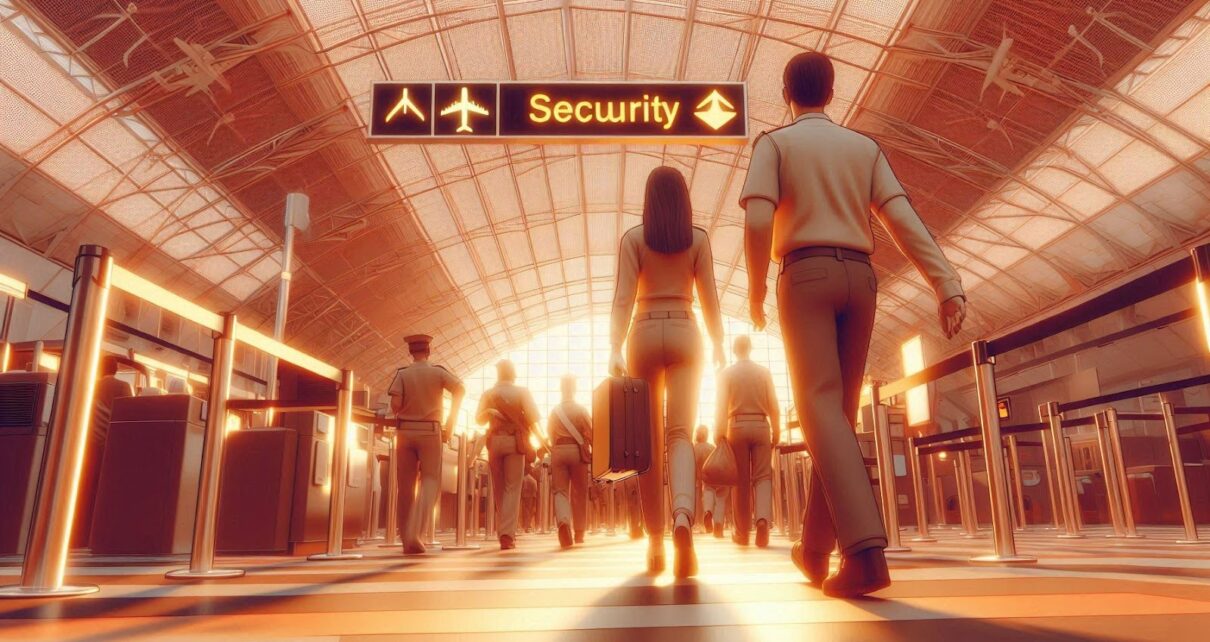
New modernized verification system streamlines identity checks for passengers lacking standard federal credentials
WASHINGTON, DC. Travelers who show up at the airport without a compliant ID have always existed. They are the person who left a wallet on the kitchen counter, the student whose license expired quietly, the business traveler who assumed a photo of an ID would be enough, the family dealing with a last-minute emergency flight.
What changes in 2026 is how the Transportation Security Administration handles them and who pays for the extra work.
TSA has begun rolling out “ConfirmID,” a fee-based alternative identity verification process aimed at passengers 18 and older who do not have a REAL ID-compliant driver’s license or another acceptable form of identification. Under the new policy, travelers who need this extra screening path pay a $45 fee for a 10-day travel window, and TSA attempts to verify identity through modernized, technology-supported checks. Verification is not guaranteed, and the agency warns that passengers should expect delays.
An official summary for travelers, including the start date and the central rule that verification is not assured, is laid out in this government guidance from the Defense Travel Management Office: Travelers without REAL-ID could pay $45 for TSA’s ConfirmID beginning February 1, 2026.
The headline is the fee. The larger story is what it signals about airport security in 2026: identity is being treated as the first security layer, and the system is being rebuilt to make that layer faster for most travelers while becoming more structured, and more unforgiving, for the small group who arrive unprepared.
Why “ConfirmID” exists at all
The TSA checkpoint has always had an awkward truth at its center. The agency needs to verify identity to keep aviation security credible, but life is messy. People lose IDs. People get them stolen. People forget them. And in the old workflow, every one of those exceptions forced TSA into a slow, resource-heavy process that pulled officers away from the line.
That older method often looked like a manual interrogation of your personal history, sometimes backed by commercially available data and phone-based verification support. It worked, but it consumed time, staff, and patience, and it created a strange fairness gap. The traveler who arrived prepared could breeze through. The traveler who arrived without an acceptable ID could still sometimes get through, but only after a process that was not consistent from airport to airport and could become a bottleneck on high-volume days.
ConfirmID is TSA’s attempt to formalize the exception lane. It does two things at once.
First, it standardizes the workflow so the agency can scale it without improvising at the podium.
Second, it shifts the financial burden of that workflow to the traveler who needs it. TSA has framed the fee as a way to ensure the cost of extra verification does not fall on taxpayers or on the majority of compliant passengers.
In the language of service journalism, it is the airport version of an expedited service charge. If you want the system to do extra work because you are missing the usual requirement, you pay for that work.
What is changing at the checkpoint
For many travelers, the new policy will feel like a warning sign made real.
REAL ID compliance has been emphasized for years, and most travelers now show up with compliant IDs or with other acceptable documents. What ConfirmID does is define what happens when you do not.
Instead of relying solely on the old manual alternative verification path, TSA now expects a traveler who lacks a compliant ID to complete a fee-based process that begins before they reach the front of the security line. In many airports, that means travelers are directed to a separate step, sometimes even before joining the standard queue, so the identity question is resolved, or not resolved, without clogging the main flow.
The key operational detail is that ConfirmID is time-boxed. It is valid for 10 days from the travel start date entered in the payment process. If you travel again after that window and still lack acceptable ID, you pay again.
That structure reveals what TSA is trying to optimize. The agency is not only screening travelers; it is managing throughput. It wants the exception cases to be handled in a predictable way that does not pull the entire checkpoint down with them.
What it means for non-REAL ID travelers, in plain English
If you are 18 or older and you arrive at a TSA checkpoint for domestic air travel without a REAL ID-compliant license or another acceptable ID, your odds of a smooth experience drop sharply. ConfirmID is the path TSA is pointing to, but it is not a guarantee.
You can pay the fee in advance and follow the instructions, but TSA may still be unable to verify you to the level required for clearance. That is a critical point that is easy to miss when people focus on the dollar figure. The fee buys an attempt, not a promise.
This is also why TSA continues to emphasize the simplest solution: bring an acceptable document. ConfirmID is a backstop, not a replacement for basic preparation.
The equity debate: who gets hit hardest by the $45 reality
There is no way around it; $45 is not a trivial amount for many people. It is the price of a meal for a family, a prescription refill, a week of transit. It is also non-refundable, even if the verification attempt fails and you miss your flight.
That is where ConfirmID becomes a social question as much as a security question. In theory, the policy encourages compliance and reduces the burden on the system. In practice, it creates a penalty that lands most sharply on people who are already living closer to the edge.
Some travelers will be caught by life events. A lost wallet the night before a flight. A theft on a trip that forces an unexpected return. A sudden family emergency where no one has time to replace an ID.
Other travelers will be caught by the slow churn of bureaucracy. REAL ID appointments can still be difficult in some regions, and some people have documentation gaps that make it harder to obtain compliant credentials quickly.
The policy does not differentiate between those groups. It treats them as one category, non-compliant at the checkpoint. That simplicity is operationally convenient, but politically and socially, it is the kind of thing that tends to attract scrutiny.
The security logic, and why TSA is tightening the identity layer
From TSA’s perspective, the case is straightforward. Identity verification is not a formality. It is the first gate that prevents people from flying under false names or under borrowed credentials.
If you believe aviation security is a layered system, then identity is the first layer. If that layer is weak, every downstream layer, from behavioral observation to screening procedures, begins with uncertainty.
ConfirmID is being framed as a modernization of that layer. It moves away from a purely manual alternative screening method and toward a technology-supported model that can scale and be audited more consistently.
This also fits a broader trend in travel security. Across borders and airports, identity is becoming more automated, more biometric, and more integrated with databases and verification tools. That trend is showing up in boarding, in border processing, and now in domestic checkpoint identity checks.
Analysts at Amicus International Consulting have been tracking the same shift across airport and border systems, arguing that the practical risk in 2026 is less about dramatic security theater and more about identity continuity, meaning your documents, bookings, and background records need to align cleanly across systems because automated verification is less forgiving than a human glance.
In other words, the easiest travel in 2026 belongs to people whose records are consistent and current. The hardest travel belongs to people who arrive with gaps, mismatches, or missing credentials.
How to avoid ConfirmID entirely
This is the part most travelers actually need.
If you do not want to be the person paying $45 and sweating through an extra verification step, treat your ID like a boarding requirement, not a personal accessory.
Check now, not the night before
Look at your driver’s license or state ID and confirm it is REAL ID compliant. If you are not sure, do not guess. Do not assume.
Build a backup document habit
If you have a passport or another acceptable document, store it in a place that is accessible for travel. The goal is not to carry everything every time; it is to have a credible fallback if you lose one item.
Do not rely on a photo of an ID
Airports are full of people scrolling through camera rolls with shaky hands. A photo is not the same as an acceptable physical credential.
Leave extra time if you think you might be an exception
If you are traveling with an ID that is close to expiring, if you recently changed your name, or if you are in any kind of documentation transition, plan like you may be routed to an extra step.
What to do if you are already at risk of needing ConfirmID
Sometimes the best advice is damage control.
If you realize before leaving for the airport that you do not have acceptable ID, do not hope it will work out. That is how people miss flights.
ConfirmID is designed to be completed online, and travelers are strongly encouraged to pay in advance and arrive with proof of payment ready to show. If you wait until you are standing in the terminal, you are adding an extra time tax in the busiest part of the process.
Also assume the process will be longer than you want it to be. TSA has been clear in public messaging that verification can take time, and depending on airport conditions, it can push into the range that breaks tight itineraries.
The business travel angle: why this matters beyond the fee
For frequent flyers and the companies that pay for their tickets, ConfirmID introduces a new category of avoidable disruption.
A missed flight is not only an inconvenience. It is a cascading cost. Rebooking fees, hotel nights, missed meetings, project delays, and reputational stress all add up. For sales teams and executives who travel weekly, “forgot my ID” becomes a surprisingly expensive mistake.
ConfirmID also changes internal travel policy conversations. Companies that manage travel risk may begin reminding employees to maintain compliant IDs in the same way they remind them to keep passports current. Not because they love bureaucracy, but because the alternative is operational chaos.
Why “streamlined” does not mean “easy”
There is a subtle messaging trap around any modernization project.
When TSA says ConfirmID streamlines identity checks, it is describing system efficiency, not traveler comfort.
Streamlining for TSA means fewer ad hoc calls, fewer unpredictable manual processes, and better use of staff. Streamlining for travelers only happens if the system verifies you quickly and reliably.
The danger is that people hear “streamlined” and treat ConfirmID like a paid pass-through inconvenience. It is not that. It is a paid attempt at verification. The system can still say no.
That is why the most responsible way to think about ConfirmID is as an emergency tool. It is something you may be grateful exists when you are in a bad situation, but it is not a tool you should plan to rely on as part of normal travel.
The political and privacy questions that follow any identity upgrade
ConfirmID also sits in the middle of a broader cultural debate about identity verification.
When government systems become more technology-supported, the next questions are predictable. What data is used. How long is it retained. How is it protected. What vendors are involved. How are errors corrected. How can a traveler contest a mistaken identity record.
Those details tend to surface after rollout, when edge cases begin to pile up. The traveler who is repeatedly misidentified. The person whose records are confused with someone else’s. The individual who passes every verification question and still gets denied because the system cannot establish certainty.
These stories are already circulating in travel media and local news because ConfirmID touches a nerve. It is the intersection of security, inconvenience, money, and personal identity.
If you want to monitor how the reporting is evolving, this running collection of recent coverage is one place to track it: ConfirmID rollout and the $45 fee.
What to expect in spring and summer 2026
The early months of any national rollout are uneven.
Some airports will handle ConfirmID smoothly with clear signage and trained staff. Others will struggle with traveler confusion, long queues, and last-minute panic. The difference often comes down to operational design, where the extra step is placed, how clearly it is separated from the main queue, and how staff communicate the rules without escalating stress.
Expect this to be most visible during peak travel. Spring break, early summer, holiday weekends. Those are the days when a small number of exception cases can become a bigger problem because everyone is already operating at capacity.
The simplest prediction is that ConfirmID will work best for travelers who take it seriously, pay ahead, arrive early, and come prepared to follow instructions quickly. It will work worst for travelers who learn about it at the podium.
The bottom line
ConfirmID is TSA’s new answer to an old problem: what to do with a traveler who shows up without compliant identification when the agency still needs to be confident about who is entering the secure area of an airport.
The policy tightens the identity layer, standardizes the exception workflow, and shifts the cost to the traveler who needs it. It will likely reduce some operational strain at checkpoints. It will also create a new kind of friction for a small but very real group of passengers who arrive unprepared or unlucky.
If you are trying to travel with less stress in 2026, the most valuable “hack” is not a faster line. It is basic identity readiness. Bring compliant ID. Carry a backup. Check your documents before you pack your shoes.
Because in the new checkpoint economy, the most expensive mistake is the one you could have avoided at home.