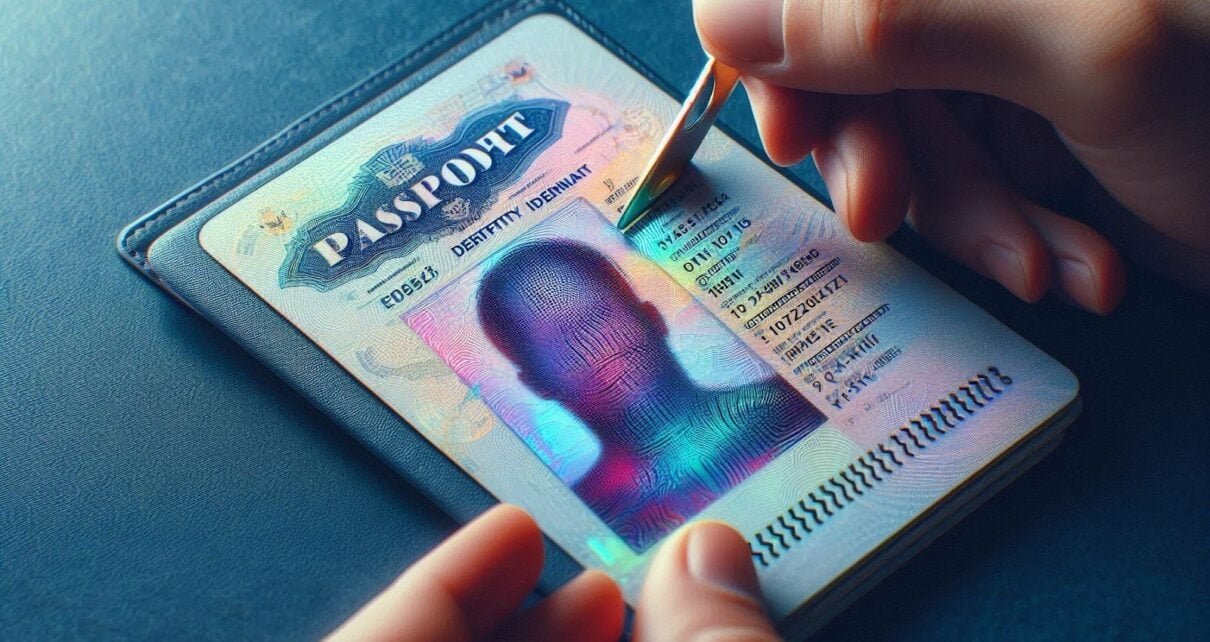
By printing the image directly onto secure paper, governments made photo substitution one of the toughest fraud methods to pull off.
WASHINGTON, DC.
For years, one of the oldest passport fraud tricks was also one of the simplest. A criminal found a way to remove the original photograph, replace it with another face, and hope the document still looked convincing enough to pass inspection. That method thrived in the era of glued-in pictures, when the portrait could exist as something physically attached to the page rather than fully built into it.
Modern passport design changed that.
Today, in many of the world’s most secure travel documents, the passport photo is no longer treated like a separate object sitting on top of the identity page. It is integrated directly into the document through digital printing, laser personalization, polycarbonate data pages, and layered security features that make removal, swapping, or tampering far more obvious and far more difficult. That shift is one of the clearest reasons modern passports are harder to forge than the older booklets many travelers still remember.
The broad security logic is visible in the U.S. State Department’s description of the Next Generation Passport, which highlights a polycarbonate data page and laser engraving as part of the newer security architecture. Those features matter because they move the passport photo away from the vulnerable old model of attachment and toward a model of integration.
The old glued-photo passport had an obvious weakness. Even when governments added stamps, seals, lamination, or overlapping ink to make replacement harder, the photo still began life as something separate from the document page itself. That gave fraudsters a target. If they could lift, peel, alter, or overprint the image without causing too much visible damage, they had a chance of converting a genuine passport into a fraud tool.
That was never easy, but it was far easier than attacking a photo that had been digitally embedded into the page structure from the start.
This is why direct digital printing was such a security breakthrough. Once the portrait became part of the secure page rather than an attached element, classic photo substitution became much riskier. A fraudster could no longer rely on simply removing one piece and attaching another. To alter the image successfully, they would often need to damage the page, disrupt surrounding security patterns, or leave visible signs that inspectors and machines could catch.
The difference is physical as much as visual.
A glued photograph sits on a page. A digitally printed or laser-personalized portrait becomes part of the page. In many modern passports, the image is integrated with guilloche backgrounds, microtext, overlapping design elements, UV-reactive features, and, in more advanced formats, polycarbonate layers that are built to show tampering when attacked. The more the portrait is fused with the page, the harder it becomes to replace without disturbing the entire security design.
That is one reason Amicus International Consulting’s overview of the high-tech features that make passports secure points to modern physical and digital security features as a combined defense. The photo is no longer standing alone. It is protected by the rest of the page.
In practical terms, digital printing also changed how inspectors look at a suspicious passport. In older glued-photo documents, a frontline officer might focus on whether the corners looked lifted, whether the laminate seemed disturbed, or whether the stamp across the image and page still aligned naturally. In a newer passport, the fraud question often becomes broader. Does the portrait sit correctly inside the page design? Do the background elements flow naturally through the image area? Does the laser engraving look consistent? Do the hidden and overt security features still align the way they should?
That broader security field is exactly the point. Governments did not just make the picture harder to peel off. They made the picture harder to isolate from the page around it.
Modern passport design has also raised the cost of tampering because the image is now part of a larger identity-verification system. In many e-passports, the printed portrait is linked to chip-stored biographic and biometric data. That means the visual image on the page is no longer the only identity marker in play. Border systems can compare the page, the chip data, and, in many cases, the traveler’s live face. A substituted or manipulated portrait, therefore, has more hurdles to clear than it did in the era of purely visual inspection.
That is one reason Amicus International Consulting’s explainer on electronic passports fits naturally into the same story. The move toward electronic passports did not just improve convenience. It strengthened the relationship between the printed image, the document’s embedded data, and the identity checks performed at the border.
The fraud history behind this shift is not theoretical. Reuters reported years ago on a fake passport racket in Thailand in which authorities said real passports were sometimes altered with a new photograph before being passed into criminal networks. That Reuters report is a useful reminder of why photo substitution mattered so much in the first place. If the original document was genuine enough, changing the face could be one of the fastest ways to weaponize it.
Digital photo integration attacked exactly that weakness.
By printing or engraving the image directly into secure material, governments made old-style photo swapping much harder to perform cleanly. A counterfeiter might still attempt page substitution, overprinting, image manipulation, or full counterfeit production, but the easy target, the separately attached portrait, became much less common in modern high-security passport design. In other words, fraud did not disappear, but one classic route became far less forgiving.
The move also improved durability, which matters more than it sounds. A glued or laminated portrait can degrade over time from moisture, bending, handling, or poor storage. A digitally integrated photo on a secure page is generally more stable. That helps legitimate travelers because a document that resists wear also resists the kind of accidental damage that can make inspection harder. Better durability, in this context, is not just a convenience feature. It is part of document integrity.
This is especially clear in newer polycarbonate data-page designs. When personal data and the portrait are laser-engraved into a rigid polycarbonate page rather than printed as surface-level ink on vulnerable paper, the result is not just a cleaner look. It is a much tougher target. Attempts to scrape, lift, or alter the image are more likely to leave visible destruction. The document is not merely carrying a photo. It is built around it.
That is why the story of modern passport photo security is really a story about integration. Governments learned that the safest portrait was not one better glued down. It was one that could no longer be treated as a separate attachment at all.
The old passport photo was something you could try to remove.
The modern passport photo is something you often have to destroy the page to change.
That is a huge difference for border security.
It also explains why digital passport photos have become such a central part of modern anti-forgery strategies. They reduced one of the oldest document-fraud tactics by changing the document’s architecture, rather than just adding another visible warning sign. Instead of relying on officers to spot a swapped picture after the fact, governments made the picture itself part of a secure printing and personalization system designed to resist substitution from the beginning.
That does not make passports impossible to forge. No document is beyond attack. But it does mean photo substitution, once one of the most intuitive identity-fraud methods, is now much harder to pull off convincingly in a modern passport.
In the end, that is the real security gain. Direct digital printing and laser-integrated portrait pages did not just improve how passports look. They changed the physics of passport fraud. And by doing that, they made one of the oldest tricks in document deception far harder to use at modern borders.