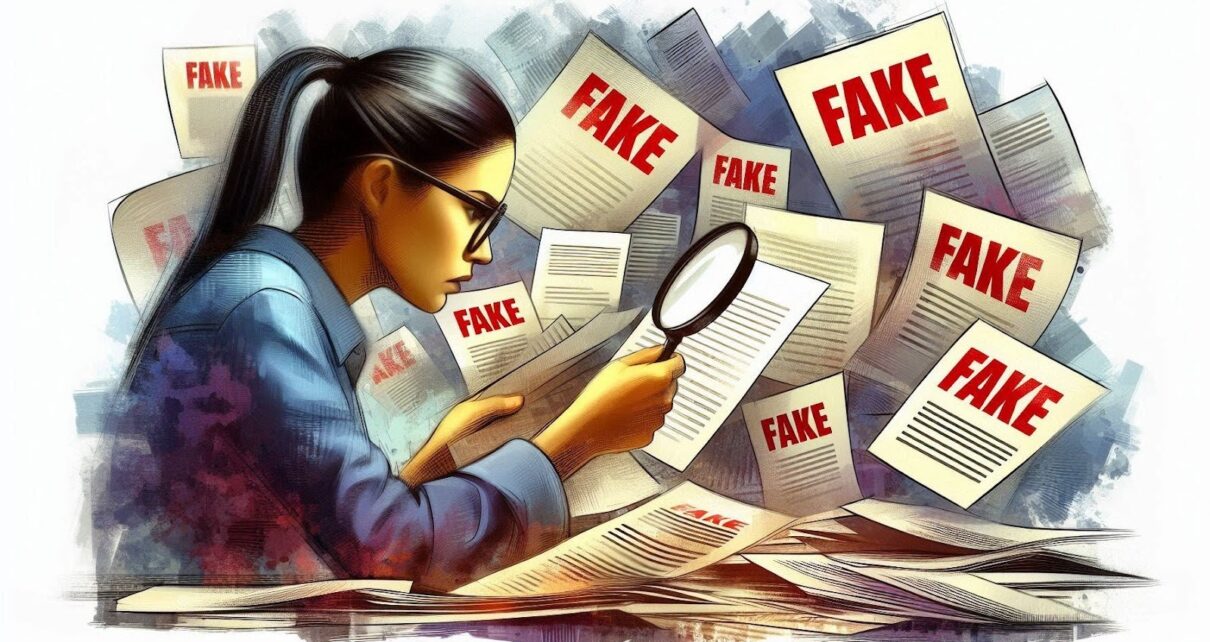
Criminal networks are blending real Social Security numbers, false names, and invented histories to open accounts, build credit, and vanish before losses surface.
WASHINGTON, DC.
Synthetic identity fraud has become one of the most stubborn and expensive forms of financial deception in 2026 because it does not always look like identity theft when it begins. There is often no victim who immediately notices a drained account, a hijacked login or a missing passport. Instead, criminals assemble a person who does not fully exist, using real data fragments mixed with invented details, then let that false profile mature inside the financial system until it can be exploited.
That is what makes synthetic identities so dangerous. They are not always stolen in the traditional sense. They are built.
The dark web has accelerated that process by turning identity components into a marketplace. Criminals no longer need to steal every element themselves. They can buy pieces of a profile, combine them, and test what works. One seller provides breached personal data. Another provides phone access, document support, or account credentials. Another offers guidance on onboarding checks. Another handles monetization or cash-out. What emerges is not just a fake application. It is a manufactured customer.
The fraud begins with fragments, not a finished identity.
Synthetic identity fraud works because modern systems still accept partial consistency as proof of legitimacy. A real Social Security number paired with a false name, a new address, a fresh email, and a plausible date of birth can be enough to create the outline of a person. If that outline survives basic review, it can begin accumulating real-world signals, a credit file, a payment history, a device footprint, or an account history that makes the identity look even more credible over time.
That is one reason the fraud is so difficult to detect early. The profile may appear thin, but not obviously fake. It may trigger denial at first, yet still leave a record behind. Later, after repeated use and gradual seasoning, the same profile can look much stronger than it did at the start.
A Federal Reserve-backed industry framework defines synthetic identity fraud as the use of personally identifiable information to fabricate a person or entity for dishonest gain, and its overview of synthetic identity fraud makes an important point. The problem is not only that the data is false. It is that enough of it can be real to make the identity difficult to classify, difficult to model, and easy to misread inside ordinary payment and credit systems.
The dark web lowered the cost of building fake people.
The dark web’s role in this market is not just secrecy. It is efficiency. It has made the raw materials of synthetic identity fraud easier to source, compare, and reuse. Instead of stealing a complete life in one stroke, criminals can buy pieces and assemble them like components.
That shift matters because it lowers the expertise required to commit the fraud. A person who cannot breach a database may still be able to buy leaked information. A person who cannot create forged support records may still be able to hire someone who can. A person who cannot launder money alone may still be able to pass the finished profile to another criminal who specializes in monetization.
This is where synthetic identity fraud starts to resemble a supply chain rather than a one-off scheme. The dark web and related encrypted criminal channels allow the work to be divided into specialized roles. One group sources the data. Another stabilizes the profile. Other tests it in the financial system. Another pulls value from it. The end result is a manufactured identity that may look routine to the institution that encounters it.
Why synthetic identities often survive onboarding.
A traditional stolen-identity case can trigger immediate alarms because there may be a living victim, an existing account holder, or a sudden conflict in the records. Synthetic identities are harder because the contradictions are subtler.
The person does not entirely exist, but parts of the profile may. The Social Security number may belong to a real person. The mailing address may be usable. The phone may answer. The email may work. The document image may look clean. The behavior may appear cautious at first. From the perspective of a rushed onboarding system, the profile can look merely new rather than fraudulent.
That is the weakness that synthetic fraud exploits. Too many systems still focus on whether fields match each other, rather than whether the identity story makes sense over time. If the information looks internally consistent, the account may be opened or at least allowed to remain in the system. Once that happens, the fraudster has something more valuable than stolen data. They have a foothold.
Building credit is part of the scam, not a sign of legitimacy.
One of the most misunderstood aspects of synthetic identity fraud is the slow, patient way it can develop. Criminals do not always cash out immediately. In many cases, they intentionally behave like cautious new customers. They make small payments. They use low limits carefully. They avoid drawing attention. They let the account age.
That creates a dangerous illusion. A profile that has been quiet for months can begin to look trustworthy precisely because it has survived. Yet that survival may be part of the fraud design. The longer the synthetic identity remains in the system, the more likely it is to receive higher limits, better offers, additional products, or fewer manual reviews.
By the time the losses surface, the profile may have accumulated enough signals to look real to multiple institutions at once. That is why synthetic identity fraud is often discovered late, after the account has already matured and the exposure is much larger than it first appeared.
The industrial model is becoming easier to see.
Governments are increasingly treating online fraud infrastructure as organized criminal machinery rather than as isolated scams. A recent Reuters report on sanctions targeting a Cambodia-based scam compound and a crypto marketplace linked to stolen personal data underscored how authorities are now focusing on the infrastructure that supports deception at scale, including marketplaces that help circulate data and fraud-enabling services.
That matters for synthetic identities because they depend on exactly that kind of infrastructure. They are not usually created from thin air by one individual working alone. They are supported by markets for stolen personal data, communication tools, account access, forged supporting material, and laundering assistance. Once those services become easy to find and easy to replace, building a fake customer becomes less like a rare criminal craft and more like a repeatable business process.
Victims may not know they are victims for years.
Another reason synthetic identity fraud remains so hard to detect is that the real person behind the data fragment may have no idea their identifier is being used. A number can be borrowed into a fake profile without triggering the kind of immediate warning that comes with a drained checking account or a frozen credit card.
That delay gives the synthetic profile room to grow. It also gives institutions a false sense of confidence. If no one is complaining, the account can appear stable. If the record behaves normally, the file can seem low risk. But silence is not proof of legitimacy. In synthetic fraud, silence is often one of the reasons the scheme lasts so long.
Document support and digital history make the fraud stronger.
Synthetic identities do not survive on data fields alone. They become more convincing when criminals add supporting material, utility traces, phone records, email activity, device habits, employment claims, or document images that help the profile feel complete.
This does not always mean a full fake passport or driver’s license is required at the outset. Often, the goal is just enough support to get through the next control. A digital record, a plausible billing trail, or a clean-looking upload can be enough to move the profile forward.
That is why synthetic identity fraud crosses into document fraud, account fraud, and credit fraud all at once. It is not a single crime type. It is a method for turning partial truth into a commercially useful deception.
Not every identity change belongs in the same category.
As anxiety around identity manipulation grows, one distinction matters. Synthetic identity fraud is not the same as a lawful administrative identity change carried out in accordance with legal rules. Public discussions often blur those categories, but they are fundamentally different.
A legal process for changing your name and updating identity records operates within formal requirements and cannot lawfully be used to escape criminal, civil, or financial responsibility. Synthetic identity fraud, by contrast, is built on deception and false attribution. Keeping that line clear matters because criminal networks benefit when every conversation about identity change becomes confused.
Why this fraud keeps beating institutions.
Synthetic identities became one of the hardest frauds to detect in 2026 because the systems they target still tend to reward patience, surface-level consistency, and incremental trust. Dark web markets made identity components easier to source. Financial systems still allow thin files to age into stronger ones. And many institutions are better at spotting sudden theft than slow fabrication.
That combination is what makes synthetic fraud so durable. It does not need to look dramatic. It only needs to look ordinary long enough to become valuable.
In the past, identity fraud was often imagined as the theft of a real person’s life. In 2026, one of the bigger risks is something more unsettling. Criminals have learned how to manufacture people just believable enough for the system to accept them.