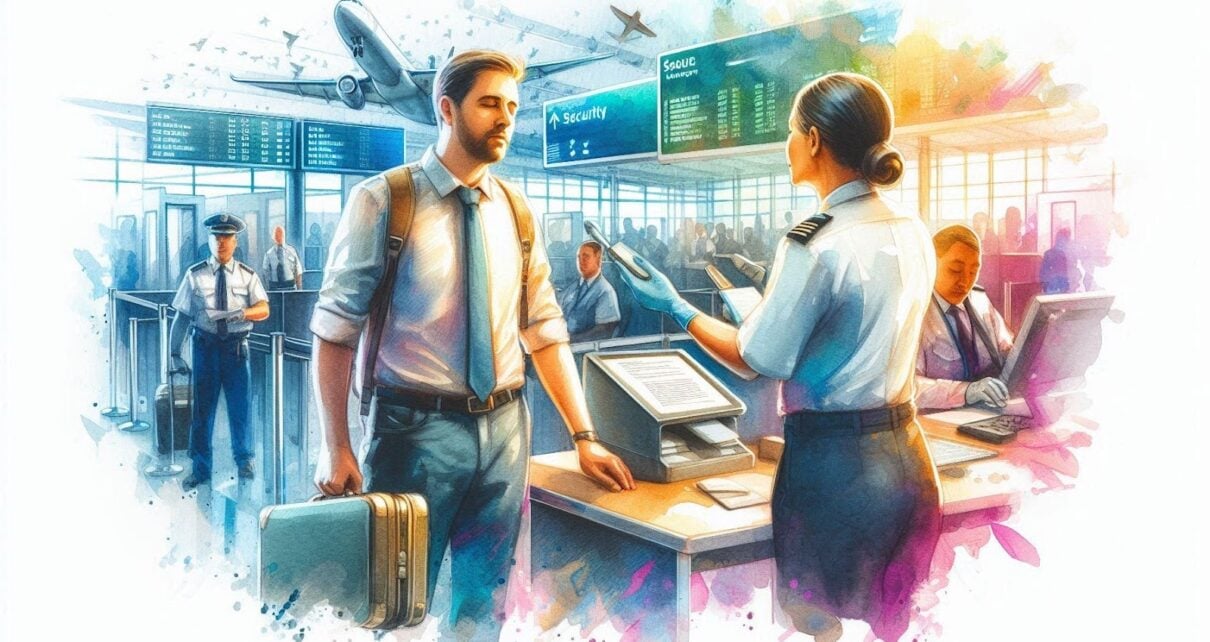
Identity matching failures persist when data systems cannot reliably link records across jurisdictions.
WASHINGTON, DC
One false name can do more than mislead a single officer at a single checkpoint. It can split a person into multiple digital versions of themselves across borders, databases, and agencies, turning what should be one risk record into scattered fragments that do not always connect in time.
That is the core “alias problem” facing border and security systems in 2026. Watchlists are only as strong as the matching logic that finds the person behind the name. When systems cannot reliably link biographic records, an alias can delay detection, complicate investigations, and create costly false positives, all while giving higher-risk travelers more room to move.
Here is why it matters now. Governments are expanding biometric screening and interoperability projects because they have learned, often the hard way, that names are a weak anchor. Names change. Names translate poorly. Names are entered inconsistently. Names get inverted or abbreviated. Names get deliberately manipulated. And when watchlists are built on biographic matching alone, a single invented name can become a practical shield, even if only temporarily.
What “fragmentation” looks like in the real world
Fragmentation is not a science-fiction identity swap. It is a series of ordinary failures that add up.
A traveler is booked under one spelling on an airline reservation, checked in under another spelling at a counter, and presents a passport with a third variation, all of which can be technically consistent with how names move across languages. A border system stores one entry under the reservation’s name and another under the passport’s name. Police encounter later uses a nickname or a different date format. A court record lists an alias, but it is not automatically linked to immigration history. A foreign partner holds an alert, but it sits in a separate system that is not searched during routine checks.
None of these failures is dramatic. Each one is plausible. Together, they create blind spots.
In the best case, the result is friction for an innocent person with a complicated name history. In the worst case, the result is time, time to travel, time to settle, time to open accounts, time to build a cover story, time to disappear into ordinary life.
Why names break, even when everyone is acting in good faith
Most people assume name matching is simple. It is not.
Names do not behave like serial numbers. They behave like culture. A single person can legitimately appear as several different strings across systems because of transliteration, patronymics, double surnames, diacritics, spacing conventions, and ordering rules. Even in English-only environments, hyphens, middle names, suffixes, and “known as” variations create noise.
Then there is human data entry. Border officers and airline agents work fast. Not every character is entered perfectly. Not every scanned document reads cleanly. Not every system handles special characters. Not every record is updated when a passport is renewed. Over time, small discrepancies accumulate.
Add deliberate manipulation, and the problem scales quickly. An alias does not need to be clever. It only needs to be different enough to avoid an automatic link, and plausible enough not to trigger suspicion on its own.
Watchlists are not one list
The public talks about “the watchlist” as if it is one thing. In practice, watchlists are a web.
Some are immigration focused, tied to admissibility and visa status. Some are criminal, tied to warrants and convictions. Some are intelligence-driven, tied to investigation and association. Some are aviation-driven, tied to travel patterns and passenger data. Some are international, tied to partner notifications and cross-border cooperation.
These systems have different rules, different data fields, different legal authorities, and different refresh cycles. Even when agencies cooperate, the records do not always merge. They often sit side by side, requiring an analyst or a frontline officer to connect them.
That is what an alias exploits. It takes advantage of the fact that the modern identity ecosystem is not a single database. It is many databases stitched together by imperfect matching.
Why biometrics are becoming the “closer”
This is why governments have moved toward biometrics. Biometrics do not eliminate risk. They can be implemented poorly. They can raise legitimate civil-liberties concerns. They can produce false matches if data quality is weak. But they are far harder to manipulate than names when collected and compared correctly.
A face image can still be fooled in some settings. Fingerprints are harder. Multi-modal approaches are harder still. The point is not that biometrics are magical. The point is that they offer a way to link records even when biographic data is messy, missing, or manipulated.
Europe’s approach is instructive. The EU has been building interoperability components designed to detect multiple identities across systems, including the Multiple Identity Detector, a technical response to the reality that people can present different biographic profiles across different databases. The EU’s public description of that work is here: eu-LISA Interoperability.
The deeper message is that watchlists are evolving from “name lists” into “identity graphs,” networks of linked data points where biometrics help confirm that multiple records belong to the same person.
How false positives and blind spots grow from the same weakness
The alias problem does not only let some people slip through. It also causes innocent people to get flagged.
When matching is crude, systems compensate by widening the net. They rely on partial matches, approximate spellings, and broader criteria. That can catch more threats, but it can also catch more bystanders, especially people from cultures with common names, or those whose documentation has inconsistent transliteration.
So, the same weakness creates two opposing failures.
One is the blind spot, when an alias prevents a link.
The other is the dragnet effect, when systems respond by flagging too broadly.
That is why the most sophisticated programs are moving toward layered resolution. Use biographic matching to narrow the field. Use biometrics and linked records to confirm. Use human review when the stakes are high.
The “one false name” playbook, and what it usually requires
A single alias can start fragmentation, but sustained evasion usually requires more than a new name. Most long-running cases involve some combination of:
Document continuity gaps, including missing or inconsistent breeder documents.
Address instability, making it hard for authorities to locate the person.
Low-profile living, avoiding regulated touchpoints that require identity verification.
Jurisdiction hopping, shifting between places where data linkage is weaker.
Exploiting institutional silos, staying just outside the systems that talk to each other efficiently.
The weak point for most evasion strategies is the enrollment moment. People can travel quietly for a time, but eventually they need something that demands deeper proof. A job. A lease. A bank account. A visa renewal. A residency permit. A driver’s license. A benefits application. That is when fragmented records are most likely to be reconciled.
What frontline officers and institutions can do differently
This is where the story becomes practical. The answer is not “trust nothing.” The answer is “verify in layers.”
For border and airline screening, the most effective improvements tend to be procedural, not theatrical.
Treat identity as a history, not a snapshot. Ask questions that test continuity: where have you lived, where have you worked, how long, with what documentation.
Look for coherence, not perfection. Fraud narratives are often over-polished. Real lives are messy but consistent in their mess.
Elevate cases where the story and the record disagree. A perfect passport and an incoherent biography is a risk signal.
For employers, banks, and regulated platforms, the best defense is consistency checks.
Do not over-rely on a single “golden document.”
Require supporting documentation that makes the story make sense.
Watch for identity fragmentation indicators such as repeated spelling changes, unexplained date-of-birth discrepancies, rapid address changes, and reluctance to provide normal supporting records.
Make escalation easy. Many failures happen because staff are unsure whether a concern is “serious enough” to report.
How lawful identity updates can avoid looking like concealment
There is a separate, legitimate side to the alias problem: people who lawfully change names. Marriage. Divorce. Personal safety. Gender transition. Adoption. Cultural naming decisions. Immigration naturalization. All of these can create legitimate identity complexity.
The risk is not complexity. The risk is unmanaged complexity.
When people change names lawfully, the safest approach is to build documentation continuity so the new identity does not look like a break in the record. Keep certificates and court orders. Update key records in the correct sequence. Preserve the chain.
This is also why compliance-oriented mobility planning has shifted toward “durable identity,” meaning an identity profile that can withstand modern screening without creating unnecessary suspicion. Amicus International Consulting often frames this as continuity discipline, building lawful documentation pathways that reduce friction while avoiding the appearance of deliberate fragmentation. Their overview of identity continuity work is here: New Legal Identity.
Why this becomes a bigger story in 2026
The alias problem is getting more attention because border systems are becoming more connected, not less, and that raises the stakes on both sides.
For authorities, better linkage means fewer blind spots.
For ordinary travelers, better linkage can also mean more automated decisions, more screening triggers, and less room for human discretion when the system thinks it sees a match.
This is why 2026 policy debates increasingly revolve around two questions at once: how to link identities accurately across jurisdictions, and how to do it without turning every mismatch into a presumption of guilt.
In practice, most reforms are moving toward the same design principle: link records quietly in the background, then reserve the strongest enforcement actions for cases where identity is confirmed, not merely suspected.
A working definition of “identity resolution,” in plain language
Identity resolution is the process of deciding whether two or more records represent the same person.
In 2026, that process increasingly depends on:
Biometrics, as the anchor.
Interoperability, so databases can be searched together.
Data quality, so entries are reliable and consistent.
Governance, so agencies know when and how they are allowed to share.
Human review, when stakes are high and ambiguity remains.
When any one of those pillars is weak, the alias problem grows.
What readers can watch for next
Expect more news about “multiple identity” detection, not just “watchlists.” Expect more emphasis on biometric matching services and cross-system portals. Expect more debate about privacy safeguards, error correction, and appeals.
And expect more enforcement stories where the decisive moment is not a passport inspection but a biometric confirmation, the instant when a false name stops mattering because the person behind the record is finally linked across systems.
For ongoing coverage threads that surface new cases and policy moves related to aliases, watchlists, and identity matching failures, a continuously updated feed is here: alias watchlist border identity matching.
The takeaway is straightforward. An alias is rarely a magic cloak. It is a wedge. It wedges itself into the gaps between systems that cannot reliably talk to each other. Closing the alias gap is not about catching every lie. It is about building identity resolution that is accurate enough to find real risks, restrained enough to avoid punishing innocent complexity, and connected enough that one false name cannot keep turning one person into many.


