|
What this covers
|
Two houses are built to the same plan in the same year. One ends up three blocks from the ocean and one ends up six miles inland. Thirty years later they are not the same building, and the difference is not cosmetic.
The coastal one has spent three decades in air carrying salt, under a nightly marine layer, over ground where water sits closer to the surface. None of those is dramatic on any given day. All of them compound.
The Corrosion Nobody Sees
Salt in the air does not attack the house directly in any way an owner notices. It attacks the metal.
Nails, screws, joist hangers, flashing, ducting straps, the fixings holding a deck to a wall. Every one of those is doing a job that depends on it staying intact, and near the ocean every one of them is corroding faster than its inland equivalent.
The failure that matters is flashing. Flashing is the metal that directs water away from the joints where two parts of a building meet, around a chimney, along a roof valley, above a window. It is thin, it is hidden, and when it perforates, water stops being directed anywhere and starts going into the structure at the exact point the building was least designed to take it.
Nothing about that shows on the outside until the inside has been wet for a long time.
Why the Foundation Type Decides the Whole Story
In Old Town Seal Beach and the older streets around it, a lot of housing sits on a raised foundation over a ventilated crawl space. Newer construction is more often on a slab. They fail in completely different ways and they need looking at differently.
A raised foundation gives you an air gap, which is an advantage, because the underside of the floor can dry. It also gives you an enclosed space nobody enters, directly beneath the living area, which is a disadvantage, because whatever happens down there happens unobserved. Seal Beach sits at the mouth of the San Gabriel River on ground close to sea level, so groundwater is nearer the underside of those floors than it would be a few miles up the hill. Vents that are blocked, overgrown or below a raised flower bed turn a ventilated space into a sealed damp one.
A slab has no cavity to inspect, which sounds simpler and is not. Concrete wicks. Where the vapor barrier under the slab has failed or was never properly lapped, moisture travels up through the slab and arrives under flooring, and the first sign is usually a floor covering lifting or a baseboard discoloring in one specific stretch of wall.
Knowing which of the two you have changes what is worth looking at first, and it is the first question any competent assessment asks.
The Storm Is the Test
Owners dread heavy rain. From a diagnostic standpoint it is the most useful day of the year.
A building’s weaknesses are hypothetical in dry weather and demonstrated in wet. The time to look at a crawl space, a sub-floor or the inside face of an exterior wall is during or immediately after sustained rain, because that is when water is actively taking whatever path it takes, and a moisture meter can follow it.
Waiting a month to investigate means measuring a building that has had a month to partially dry, which turns a clear reading into an ambiguous one. The window closes quickly.
That is worth planning around rather than reacting to. Anyone who has had an unexplained smell, a stain that came and went, or a floor that felt soft in one spot has a question that only wet weather will answer properly.
What the Inspection Is Actually Looking For
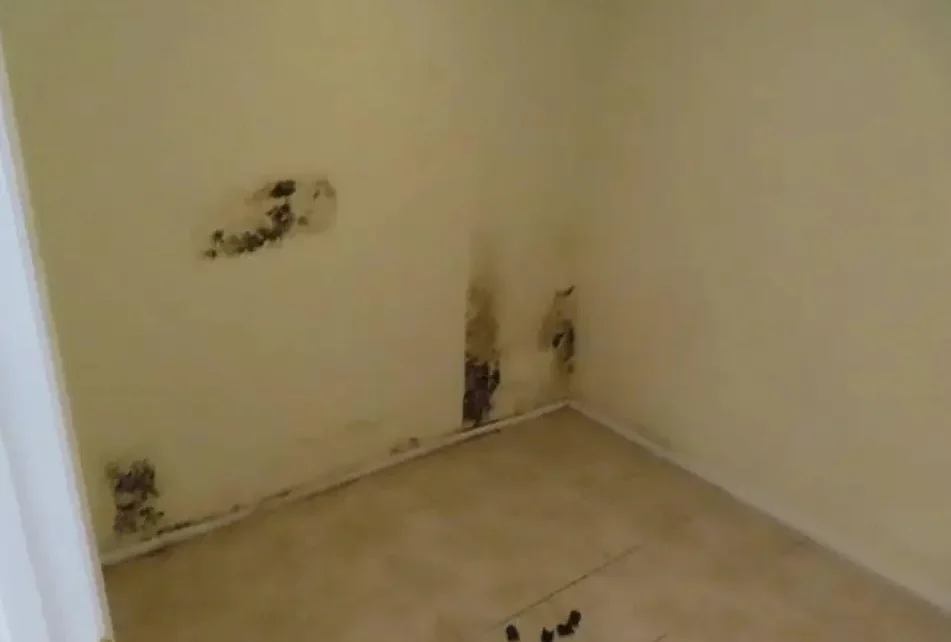
The visible growth, if there is any, is the part that was never hidden and usually the least informative part.
The work is finding the water. Moisture meters read inside materials rather than across their surface, so a baseboard that feels dry can still be carrying water behind it. Thermal imaging shows temperature differences that indicate wet material behind a finish that looks perfect. Where a reading points at a specific cavity, a borescope goes in through a small hole rather than anybody opening a wall on a guess.
Sampling follows that, not the other way round. Once there is a reason to sample, air and surface samples go to an independent laboratory and every indoor result is compared against an outdoor control taken the same day. That comparison is what makes a spore count mean anything, because outdoor air contains spores too, and a number without a baseline is not a result.
For anyone weighing up a specific property, a mold inspection in Seal Beach is a different exercise from the same job inland, and the difference is mostly in where the inspector spends their time.
The Independence Question
One structural point is worth raising, because it determines how much a report is worth.
Most companies that inspect a property for mold also sell the removal. The same firm establishes the size of the problem and prices the solution. That is a conflict of interest even when handled honestly, and it is particularly awkward in a real estate transaction where one side is relying on the finding.
An inspector who does not perform remediation has no stake in the answer. The results go to whichever contractors the owner chooses, who then bid against one identical defined scope rather than against each other’s guesses. It also leaves room for the finding that a removal company has every reason not to reach, which is that the thing you are worried about does not need removing.
In a coastal market where a damp question can hold up a sale, that distinction is worth more than the inspection costs.
Three Things Worth Doing Before Anybody Is Called
Clear the foundation vents. Pull back the planting, lift the soil level away from them, and make sure air can actually move through the crawl space. It is free and it is the single most common fault in older beach housing.
Look at the flashing after the first real rain of the season, particularly around chimneys and roof valleys, and particularly if the house has not had roof work in fifteen years.
Put a hygrometer in the room furthest from the ocean-facing wall, because that is often the one with the least air movement and the first to show a sustained problem.
Details and coverage for the practice referenced here are on its Google Business Profile.