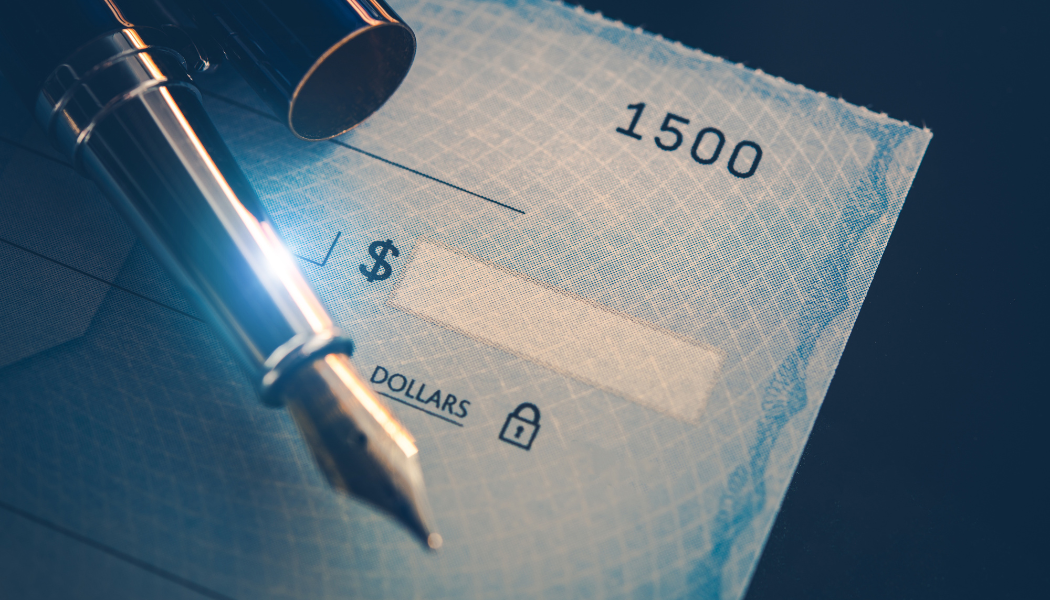
If you primarily use your phone to pay for coffee, split dinner tabs, or send rent money, the idea of a physical checkbook might seem like a relic from the 1990s. In the consumer world, speed is the only metric that matters. We want the money to move instantly.
However, the moment you step into the world of B2B transactions, the rules change. Speed takes a backseat to security, documentation, and cost control.
While digital payments have their place, they haven’t replaced the fundamental utility of paper. In fact, for many industries—from law firms and medical practices to construction and property management—maintaining a steady supply of high-security checks is not just a habit; it is a strategic necessity.
Here is why the financial industry and the businesses they serve are refusing to let the checkbook die.
1. The Auto-Renew Defense
We live in the era of the “card on file.” Every vendor, software provider, and supplier wants your credit card number stored in their system. They claim it is for your convenience, but it is really for theirs. It allows them to auto-renew subscriptions, charge for overages, or hike prices without asking for permission first.
This leads to subscription creep, where businesses bleed money simply because they aren’t paying attention to the auto-drafts hitting their accounts.
Paying by check breaks this cycle. It transforms the dynamic from a pull payment (where they take your money) to a push payment (where you give it). The vendor cannot touch your account until you physically cut the check. This restores your leverage. If a vendor wants to get paid, they have to send an invoice that you review and approve. It forces a moment of friction that saves you from unauthorized or erroneous charges that would otherwise slip through on a credit card statement.
2. The Gap Against Cyber Fraud
We hear about data breaches almost weekly, and this has become a multi-billion-dollar industry for cybercriminals. In these scams, hackers gain access to a company’s email, impersonate a vendor, and send new wiring instructions. One click later, a well-meaning employee has wired $20,000 to a fraudulent account overseas, with almost no way to get it back.
Physical checks create a necessary gap in this process. They are immune to digital hacking. You cannot hack a piece of paper sitting in a locked desk drawer.
Furthermore, modern business checks are light-years ahead of the ones your grandparents used. High-security laser checks now come equipped with forensic features that make forgery nearly impossible:
- Microprint: Tiny text that breaks up if photocopied.
- Heat-Sensitive Ink: Disappears or changes color if rubbed or heated.
- Chemical Washes: Paper that reacts visibly if someone tries to wash the ink off to change the payee.
For a fraudster to steal via check, they need physical access. For them to steal via wire, they just need an internet connection. For many risk-averse CFOs, the physical barrier is a feature, not a bug.
3. The Ultimate Audit Trail
Digital transactions are fast, but they are often messy when it comes to data. A line item on a bank statement that reads “PAYPAL * SERVICE” tells an accountant absolutely nothing about what was purchased or why.
The financial industry thrives on specificity. When tax season arrives, or in the event of an audit, you need to prove exactly where the money went.
A check provides a self-contained ecosystem of data. You have the check number, the date, the exact payee, and—crucially—the memo line. You can write the correct information right on the document. When you scan that check into your accounting software, you have an indisputable, permanent record of the “who, what, and when.” This level of clarity is often lost in the cryptic character limits of digital transfer apps.
4. Universal Acceptance
One of the hidden frictions of the fintech revolution is fragmentation.
- “Do you take Venmo?”
- “No, we only use Zelle.”
- “Actually, can you pay via this specific portal?”
Every digital payment method requires both parties to be part of the same ecosystem. If you are a business trying to pay twenty different vendors, managing twenty different login portals is a logistical nightmare.
The check is the universal adapter of the financial world. It doesn’t require an app, a username, or a subscription. Every bank in the country accepts it. Every business has a mailbox. If you need to pay a new vendor immediately, you don’t need to wait for them to be onboarded into your digital system; you just print a check and put it in the mail.
5. Escaping the Daily Limit Ceiling
Consumer fintech apps are built with training wheels. Try to Zelle a contractor $15,000 for a renovation deposit, or try to Venmo a supplier for a bulk order, and you will hit a wall. Most digital transfer services, and even some business online banking portals, impose strict daily or weekly transaction limits to mitigate their own risk.
The paper check has no such artificial ceiling. It does not care if the amount is $50.00 or $5,000,000.00. As long as the funds are available in the account, the paper clears.
In high-stakes business scenarios—like closing on real estate, purchasing a fleet of vehicles, or securing specialized inventory—you cannot afford to be on the phone with bank support begging for a temporary limit increase. You need a tool that works at scale, without question. That tool is the check.
Technology is wonderful, but it isn’t always the right tool for the job. In the high-stakes world of business finance, where security, documentation, and cost control are paramount, the check remains a heavyweight contender.
It may not be flashy, but it works. And as long as businesses care about keeping their money safe and their fees low, the laser printer will keep humming along.