We live in the era of the “one-thumb” economy. If a customer can’t solve their problem, buy their product, or schedule their service with a single thumb while waiting in line for coffee, they are likely looking for a competitor who can.
Customer satisfaction used to be about a friendly smile and a firm handshake. Today, it is measured in milliseconds. It is defined by how few steps it takes to get from “I want this” to “I have this.”
While responsive websites and friendly email support are table stakes, they often lack the speed and intuitiveness that modern consumers crave. This is where mobile software changes the dynamic. Investing in custom app development allows a brand to create a dedicated environment for their customers—a VIP lane that bypasses the noise of the open web and delivers a curated, frictionless experience.
Here is how a dedicated mobile application transforms the relationship between a business and its buyers, moving them from satisfied to loyal.
1. Personalization: Moving Beyond “Hello, [Name]”
Generic off-the-shelf software treats every customer like a stranger. When you log into a standard portal, you often have to navigate the same menus and search bars as everyone else.
A custom app acts like a digital concierge that remembers you. It utilizes historical data to anticipate needs.
- The Coffee Shop Example: Instead of showing the full menu, the app opens immediately to “Order Your Usual: Oat Milk Latte.”
- The E-Commerce Example: The app suggests accessories compatible with the specific bike you bought three months ago, rather than showing generic cycling gear.
This level of personalization signals to the customer that you value their time. You aren’t making them dig for what they want; you are serving it to them on a silver platter. This creates a psychological bond—why would they switch to a competitor where they have to start training the algorithm all over again?
2. The Power of Self-Service Support
The quickest way to tank customer satisfaction is to force someone to wait on hold. We all know the misery of listening to bad jazz music while a robotic voice tells us our call is “very important.”
Modern customers prefer to solve problems themselves. A custom app empowers them to handle administrative tasks without human intervention.
- Tracking: Real-time GPS tracking of deliveries (Uber-style) eliminates the “Where is my stuff?” anxiety.
- Account Management: Changing a billing address, upgrading a subscription, or pausing a service should be a toggle switch, not a phone conversation.
By building these capabilities into the app interface, you give the customer control. They feel empowered rather than dependent. It turns a potential negative (a billing issue) into a neutral or positive interaction because it was resolved in ten seconds at 2:00 AM on a Sunday.
3. Gamification and Meaningful Loyalty
Punch cards are dead. Nobody wants to carry a piece of cardboard in their wallet. Custom apps allow for gamification—the application of game-design elements to non-game contexts. This sounds like a buzzword, but it is a powerful psychological tool for satisfaction.
Instead of a boring “buy 10, get 1 free” model, a custom app can create tiered rewards, progress bars, and achievement badges.
- The Psychology: Seeing a progress bar at 80% creates a completion bias. The customer wants to finish the task to get the reward.
- The Surprise: You can program surprise moments, like a random discount on their birthday or a free upgrade after a streak of purchases.
This makes the shopping experience fun. It shifts the transaction from a mere exchange of money to an engaging activity. When customers enjoy the process of buying from you, satisfaction scores skyrocket.
4. The Feedback Loop: Listening at Scale
Unhappy customers rarely complain to the manager; they just leave. Or worse, they leave a one-star review on Google that stays there forever.
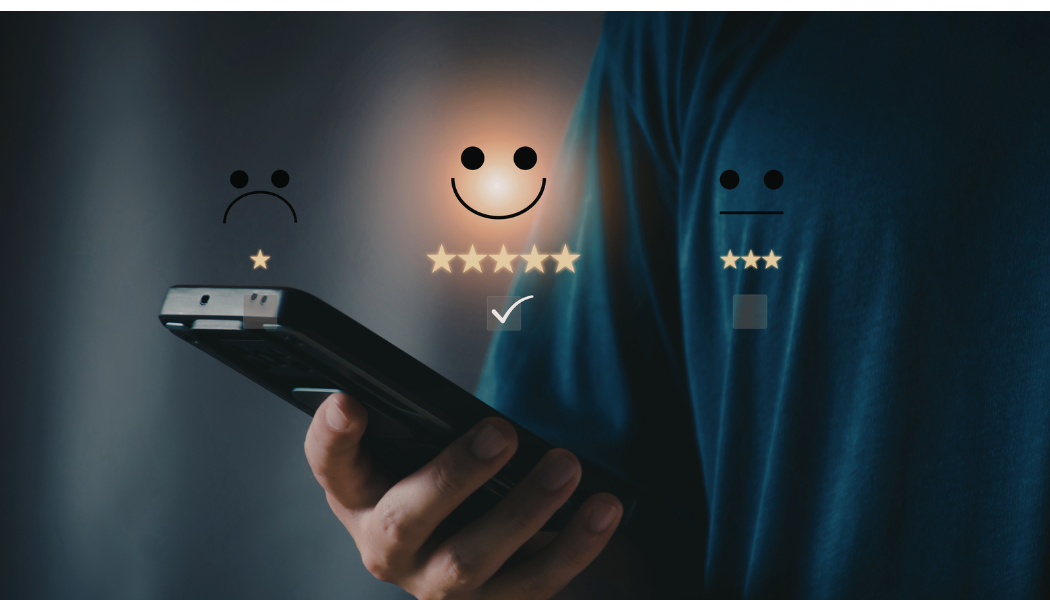
A custom app provides a private channel for feedback. By prompting users with a simple “How was your experience?” thumbs-up/thumbs-down screen after a transaction, you capture sentiment in the moment.
If they tap “Thumbs Down,” the app can immediately prompt a chat window or a feedback form that goes directly to your support team. This allows you to intercept the bad experience, apologize, and fix it before they vent on social media. It makes the customer feel heard and valued, turning a detractor into a promoter.
5. Seamless Integration with Hardware
One of the distinct advantages of a native mobile app is its ability to talk to the hardware on the user’s phone. This integration can solve physical-world annoyances.
- Biometrics: Using FaceID or fingerprint scanning to log in is infinitely better than remembering a complex password. It removes the barrier to entry.
- Camera Integration: If a customer receives a damaged product, they can snap a photo directly in the support chat. No downloading, saving, or attaching files.
- Push Notifications: Unlike email, which gets buried, a push notification is immediate. But use it wisely. Notifying a customer that “Your driver is 2 minutes away” is helpful. Notifying them about a generic sale at 4:00 AM is annoying. Custom apps allow users to tailor exactly which notifications they want to receive.
Owning the Relationship
Third-party platforms are convenient, but they own the customer. You are just a vendor. When a customer downloads your custom app, they are literally giving you real estate in their pocket. They are opting into a direct relationship with your brand.
By respecting that space—by making the app fast, useful, and personalized—you build a level of trust that a website simply cannot match. You stop being a commodity and start being a partner in their daily life. And in the end, that is the ultimate definition of customer satisfaction.