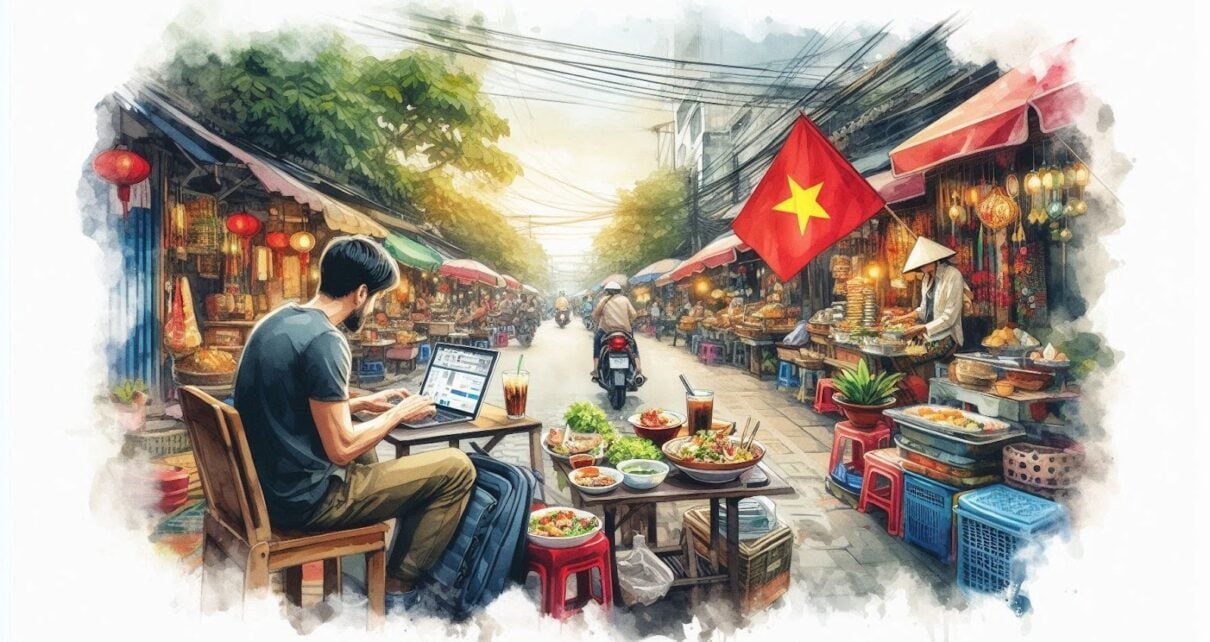
Their spending can boost local businesses, but rising rents and shifting community dynamics are creating tension in some of the world’s most popular cities.
WASHINGTON, DC.
The digital nomad economy stopped being a niche travel trend in 2025. In city after city, remote workers with foreign salaries began affecting neighborhoods in ways that felt immediate and visible, from coffee shops and coworking spaces full by midmorning to landlords rethinking whether they wanted long-term tenants at all. The change was not uniformly negative. In many places, nomads brought steady spending, filled apartments during softer tourism periods, and supported restaurants, gyms, laundromats, transport services, and neighborhood retail. But the same money that made some local businesses more resilient also intensified one of the biggest political issues in urban life: who gets to afford the neighborhood once global income starts flowing into it.
That tension is now central to the global housing debate. Digital nomads did not create the world’s housing problems on their own. Most major cities were already wrestling with undersupply, speculative investment, weak tenant protection, short-term rental expansion, and rising living costs. What nomads did was add another layer of pressure to places that were already strained. In practice, they became a highly visible symbol of a larger transformation, the conversion of ordinary residential neighborhoods into flexible global-use spaces for tourists, temporary residents, and remote professionals.
What nomads bring to a neighborhood is real money and faster change.
One reason the impact has felt so strong is that digital nomads do not spend like short weekend tourists. Many stay for weeks or months. They buy groceries, join fitness studios, use cafés as offices, pay for rides, book coworking desks, and build routines around local services. That kind of medium-term spending can help stabilize commercial streets, especially in districts that were once more seasonal or dependent on conventional tourism. A remote worker who stays six weeks can mean repeat business for the same bakery, pharmacy, corner store, and restaurant in a way that a two-night visitor usually does not.
That is why so many local business owners remain broadly supportive of the trend. In neighborhood economies, repeat spending matters. A city can market itself to remote workers not just because they are trendy, but because they behave like temporary residents with money to spend. For landlords and furnished-apartment operators, the appeal is even clearer. A mobile professional paying more for flexibility can look like a better financial proposition than a conventional tenant paying below what the new market will bear.
But that is exactly where the trouble begins. Once enough landlords realize that medium-term tenants, remote workers, and short-stay visitors can generate higher returns than local residents, the housing stock itself starts to shift. Homes stop being just homes. They become flexible assets in a global marketplace. That change can happen gradually, then all at once.
Mexico City became one of the clearest examples of the backlash.
Few places illustrated the new politics more sharply than Mexico City in 2025. As AP reported on the city’s response to anti-gentrification protests, city officials announced a preliminary plan to address rising housing pressure after protests tied to mass tourism and the increase in foreigners, often described as digital nomads, living temporarily in the capital. The report said Mayor Clara Brugada’s plan included proposals to prevent rent increases above inflation and to promote more affordable rental options. AP also noted that the anger had been building for years in neighborhoods such as Condesa and Roma, where many residents felt they were being priced out.
Mexico City matters because it shows how quickly a nomad-friendly narrative can flip. For years, the city was sold as a remote-work sweet spot, culturally rich, relatively affordable by North American standards, easy to enjoy, and friendly to people earning in stronger currencies. Then the social bill started arriving. Once residents begin associating higher rents, short-term rentals, and neighborhood turnover with the arrival of remote foreigners, the digital nomad stops looking like a harmless lifestyle figure and starts looking like part of a housing problem. AP reported that experts linked the protest not only to remote workers but also to government decisions that actively promoted the city to nomads and tourists.
That distinction matters. The issue is not simply that some foreign workers arrived. It is these governments, platforms, and property owners who built systems that rewarded their arrival without adequately protecting existing residents from the downstream effects.
Spain turned the argument into open regulatory warfare.
In Spain, the backlash was not confined to protests or rhetoric. It moved straight into enforcement. Reuters reported in May 2025 that Spain ordered Airbnb to withdraw more than 65,000 holiday-rental listings that authorities said violated existing rules, part of a broader crackdown on a business model officials blamed for worsening the housing crisis. By July, Reuters reported that Spain had targeted a total of nearly 120,000 listings it considered illegal, including tens of thousands more that lacked newly required license numbers. The government said the crackdown was about protecting the constitutional right to housing over the profits of large multinational platforms.
Spain’s case is revealing because it shows how the housing fight increasingly treats tourism rentals, temporary stays, and remote-work demand as part of one ecosystem. Digital nomads are not the same as vacationers, but in practice, they often compete for the same kinds of furnished, centrally located housing. When that stock gets pulled away from ordinary long-term tenants, cities do not always care whether the new occupant is a tourist, a seasonal resident, or a freelance designer on a three-month stay. From the point of view of the local renter who has just been priced out, the distinction can feel academic.
That is one reason politics have become harsher. The nomad economy often arrives wrapped in language about flexibility, innovation, and global talent. The neighborhood experiences it through rent, noise, churn, and the loss of year-round stability.
Lisbon shows how concentrated the pressure can become.
Portugal offers another version of the same story, one where the shift is measurable inside the housing stock itself. In its 2026 economic survey, the OECD said Lisbon’s listed Airbnb rentals rose from 18,277 in September 2019 to 21,181 in December 2024, amounting to about 7.6% of all dwellings in the urban area. The OECD also said research has found a close link between the number of short-term rentals and local housing prices in Lisbon. That matters because it turns a general complaint into something more concrete. In some districts, the housing market is not merely feeling tighter. It is visibly being reorganized. The OECD’s Portugal housing analysis lays out that concentration clearly.
Lisbon has become one of the defining post-pandemic nomad capitals, and for good reason. It offers climate, walkability, aesthetics, good infrastructure, and a lifestyle that remote workers find unusually attractive. But that very success has made the local backlash easier to understand. Once a city becomes globally desirable to people who can pay more for flexibility, every charming district starts facing the same question: Is this still mainly a place to live, or is it becoming a platform for temporary higher-yield occupancy?
That question now hangs over many popular nomad neighborhoods, not only in Portugal but worldwide. The names change, Condesa, Roma, El Born, Alfama, Canggu, but the pattern is similar. A district becomes desirable. Foreign money arrives. Landlords reprice. Local shops adapt. New cafés and coworking spaces appear. Then locals begin asking whether the neighborhood is still theirs in any meaningful economic sense.
The community impact goes beyond rent.
Housing is the loudest issue, but not the only one. Neighborhood culture changes, too. Streets get more international but sometimes less rooted. Local businesses may thrive, but older service patterns can give way to businesses built around temporary affluent demand. English becomes more commercially useful. Familiar gathering places become workspaces for outsiders. Some residents enjoy the energy and new spending. Others experience it as a thinning-out of local life.
This is where the digital nomad story becomes more emotionally charged. Rising rents are measurable. Community turnover is felt. Residents may not always object to foreigners as people. They object to the sensation that the neighborhood is being subtly reformatted for someone else’s lifestyle and budget. Once that feeling takes hold, a political backlash is hard to reverse.
Why this matters beyond 2025.
The trend is unlikely to disappear. Remote work is too embedded, cross-border mobility is too attractive, and too many governments still want the spending power of foreign earners. That means the real policy question is no longer whether digital nomads are good or bad. The question is whether cities can absorb them without sacrificing housing affordability and community continuity.
Some places will try regulation, licensing caps, rent controls, or zoning limits. Others will keep chasing foreign spending until local anger forces a harder correction. Either way, the era of treating digital nomads as a harmless lifestyle niche is over. In 2025, they became part of the housing story.
For some mobile professionals, that pressure is also pushing the conversation beyond ordinary visas and short leases and toward broader questions of legal mobility, relocation planning, and long-term optionality. That is one reason a growing subset of internationally mobile clients are also looking at wider cross-border planning through firms such as Amicus International Consulting, especially when temporary remote living begins to turn into a more permanent location strategy. That is not the main story of neighborhood change, but it is part of the larger backdrop. Mobility is becoming more structured, more deliberate, and more politically contested at the same time.
The impact of digital nomads in 2025, then, was not just that they spent money. It was they made visible a new urban fault line. Their arrival can energize local commerce, support flexible service economies, and help cities attract global talent. But when that same arrival helps convert housing into a higher-yield global asset, the costs fall on the people least able to absorb them. That is why this debate has become so heated worldwide. It is no longer really about laptop workers. It is about what a neighborhood is for, and who still gets to call it home.