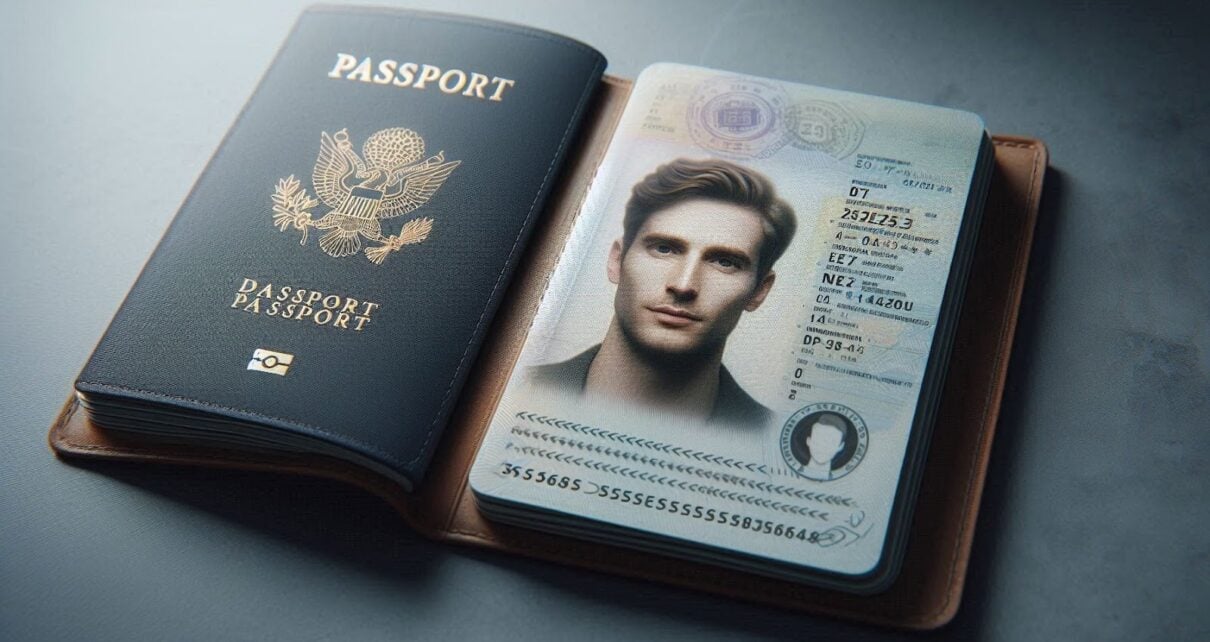
Identity confusion and fears of forgery pushed governments to lock in passport photo rules that still shape travel today.
WASHINGTON, DC.
Passport photos now seem like one of the most ordinary parts of modern travel, yet the reason they became mandatory was rooted in a much darker era shaped by war, espionage, border anxiety, and relentless document fraud.
Long before travelers worried about biometric gates, facial recognition, or whether a passport chip would scan properly, governments were struggling with a more basic question, which was how to make sure the person carrying a passport was actually the person described inside it.
For much of passport history, officials relied on signatures, written descriptions, physical marks, nationality claims, and whatever confidence a clerk or border guard could summon at the moment of inspection, which left enormous room for mistakes, impersonation, and manipulated documents.
The modern passport photograph emerged because states eventually concluded that written identity alone was too weak for a world becoming more mobile, more politically unstable, and more vulnerable to smuggling, espionage, and fraudulent cross-border movement.
The real reason passport photos are required has less to do with convenience and much more to do with control, because once governments decided that human faces had to be tied to official travel documents, fraud became harder and border inspection became more consistent.
That shift accelerated during the early twentieth century, when war and mass displacement forced governments to take identification more seriously and to build travel documents that could survive both hurried scrutiny and deliberate tampering.
What travelers now experience as a standardized photo rule was originally part of a broader security answer to a chaotic world in which states feared enemy agents, deserters, impostors, and ordinary criminals using weak documentation to slip across frontiers.
The photograph solved an old identity problem that handwritten descriptions and signatures alone could never solve with enough speed, consistency, or credibility at a real border checkpoint
Before photography became common inside passports, identity was often described rather than shown, which meant officials depended on age, height, hair color, complexion, occupation, birthplace, and handwritten signatures to decide whether a document belonged to its bearer.
That system worked only imperfectly because written descriptions are flexible, interpretable, and often vague, while signatures can be forged, changed over time, or provide very little help to an officer meeting a traveler for the first time.
A face changed the equation because it created an immediate visual checkpoint that could be compared at a glance, even when the official and the traveler did not share a language.
Once a photograph became fixed to the passport, the document no longer functioned only as a statement made by a government, but also as a physical identity claim anchored to a recognizable human body.
That made the passport much more useful, but it also made the image itself the main target for fraud, which is why so much later passport design focused on preventing photo lifting, photo substitution, and quiet tampering with the identity page.
The earliest photo systems were not yet elegant, because pictures could be glued into booklets in inconsistent ways and sometimes reflected looser social rules that would be unthinkable in a modern passport office.
Official history from Canada notes that photographs began appearing in passports in the early twentieth century, and that applicants could initially submit pictures in almost any pose, while the photos themselves were simply glued into place.
That detail matters because it shows that the first passport photo was not born as a tightly standardized security image, but as a practical step toward better identification that later had to be hardened against abuse.
Once governments discovered that loosely attached or casually accepted photographs created new fraud opportunities, they moved toward stricter rules on composition, placement, attachment, and the relationship between the image and the personal data beside it.
War pushed governments to stop treating international travel papers casually and to build documents that could withstand espionage fears, population movement, and a rapidly growing market for forged identities
The outbreak of the First World War changed migration control across Europe and beyond, because states that had once tolerated looser movement suddenly wanted tighter control over who crossed a border and why.
Historical scholarship on wartime mobility shows that the war exposed how weak official surveillance could be when governments were trying to identify enemy nationals, track movement, and separate legitimate travelers from security risks.
That pressure did not disappear when the fighting ended, because once wartime bureaucracy expands and proves useful to the state, it has a way of surviving into peacetime under the language of public order and administrative necessity.
The passport evolved from a relatively flexible travel aid into a more formalized identity instrument, and the photograph became part of that transformation because it offered something immediate that text alone could not provide.
War also sharpened official fears about impersonation, clandestine travel, and forged papers, which made it much harder for governments to accept casual identification systems that left too much to subjective judgment.
In that environment, the passport photo became more than a convenience for officials, because it served as a visual defense against confusion at a time when confusion itself could carry military, diplomatic, and security consequences.
The same wartime logic also reinforced the idea that a passport had to look standardized enough for officials across different countries to recognize, inspect, and distrust in the same disciplined way.
That is why the twentieth-century passport became not only a booklet with personal data, but also a carefully designed object whose photograph, seals, stamps, numbering, and page order all worked together to discourage fraud.
Fraud quickly taught governments that the image area was the most sensitive part of the passport; the part that needed the strongest protection against tampering
Once the photograph became central to passport verification, criminals quickly understood that they did not always need to forge an entire document if they could alter the one feature that linked the paper to the person.
A real passport with a switched photograph could sometimes be more dangerous than a crude counterfeit, because authentic paper, authentic issuance marks, and authentic numbering gave the altered booklet a head start in credibility.
That is why passport authorities increasingly treated the image area as the part of the document that needed the strongest anti-tamper protection, since a successful attack there could convert a legitimate booklet into a fraudulent identity tool.
Lamination became important for precisely that reason, because a properly protected image is much harder to remove or replace without leaving bubbles, tears, clouding, wrinkles, or alignment problems that alert an experienced inspector.
The same anti-fraud logic later influenced digital printing, secondary images, and polycarbonate data pages, but the underlying problem was already clear long before biometric chips arrived.
Even modern passport authorities still frame photo security in physical terms, because a passport fails if someone can quietly interfere with the image or personal data before an officer ever reaches the scanner.
That continuity is visible in current United States passport photo rules, which still demand a recent, clear, full face image on a plain background because the visual comparison remains the starting point of identity verification.
The rule may look cosmetic to travelers who only see the inconvenience of getting the picture right, yet it exists because a weak image standard would make the rest of the document much easier to abuse.
Standardization turned passport photographs from loosely handled portraits into disciplined security tools that could help officials compare faces quickly and spot suspicious documents more reliably
Early passport photographs often looked more like personal keepsakes than controlled identity images, because applicants might submit posed portraits, family scenes, or pictures that reflected everyday photography rather than strict identification logic.
That looseness did not survive for long because governments learned that a security photo must minimize distraction, reduce ambiguity, and present the face in a way that supports fast, reliable comparison at a checkpoint.
A neutral expression, direct angle, plain background, and controlled sizing do not exist because states want travelers to look joyless, but because every extra variable makes comparison less efficient and manipulation easier to hide.
When a country demands a recent image, it is also responding to the oldest identity problem in travel documentation, which is that a passport must represent the bearer as they can actually be recognized in real life.
That is why contemporary rules emphasize recency, image quality, facial visibility, lighting, and the rejection of digital alteration, since the passport photo has to perform a serious identification function rather than simply satisfy a formatting requirement.
Standardization also helps frontline personnel because officers inspecting thousands of documents become faster and more accurate when every compliant image follows the same visual discipline and every suspicious deviation becomes easier to notice.
In practical terms, passport photo rules made international movement more governable by reducing the amount of improvisation required at the border and by teaching officials exactly what a valid identity portrait should look like.
That seemingly narrow administrative change had enormous consequences because it turned the human face into the most recognizable and portable piece of evidence inside the passport.
The postwar drive for common passport formats helped transform the photograph into part of a global template that officials in many countries could inspect with the same expectations
The standardization drive that followed the First World War did not happen by accident, because governments and international bodies recognized that travel would remain disorderly if every country kept issuing wildly inconsistent documents.
The international passport conferences of the 1920s are important in this story because they helped lay the groundwork for recognizable formats and cross-border expectations that made passports easier to inspect and harder to improvise.
Once countries moved toward common assumptions about what a passport should contain and how it should function, the photograph became part of a larger architecture of visual credibility rather than a country-specific curiosity.
Uniformity mattered because forgery thrives on confusion, while inspection improves when officers already know where to find the image, how large it should appear, and how it relates to the rest of the identity page.
That does not mean all passports instantly looked the same, but it does mean the world gradually moved toward a shared understanding that the passport should be a standardized proof of identity rather than an individualized travel letter.
The photograph was central to that shift because it translated identity into something more legible across languages, alphabets, and national administrative traditions, which made it invaluable in international travel.
As a result, the passport photo stopped being optional decoration and became one of the essential components of document trust, even before later machine-readable and biometric systems were layered on top.
The modern traveler inherited that settlement without always noticing it, because the passport photo now feels inevitable even though it was once a contested and evolving feature.
The passport photo requirement survived into the digital age because it solved real operational problems that newer technology improved, but never fully replaced
Many bureaucratic rules disappear when they become inconvenient or obsolete, yet passport photo requirements only became more detailed over time because governments found them genuinely useful in reducing confusion and discouraging fraud.
The photo helped with simple visual matching, but it also improved administrative recordkeeping, renewal control, lost passport verification, and the general ability of states to associate a document with one particular person rather than a vague description.
It also gave carriers and border authorities a fast screening tool before more technical inspection occurred, which is one reason the passport photo remained important even after machine-readable zones and database checks appeared.
A document that can be read electronically still benefits from a strong facial image, because officers, airline agents, police, and consular staff often need to make immediate judgments before or alongside machine verification.
That helps explain why even recent redesigns continue to emphasize visible and physical image protection rather than treating the portrait as a relic from a pre-digital past.
When Reuters reported on Canada’s redesigned passport, the story highlighted laser-engraved data, secondary images, and anti-tamper features around the main photo, showing how the same problem still drives modern passport design.
The technology is more advanced now, but the basic concern remains remarkably old, because governments are still trying to stop someone from altering the image or presenting a document that does not match the face at the counter.
In other words, the passport photo requirement survived because it solved a real operational problem and because every generation of travel security found a new reason to preserve it.
The rule still matters in 2026 because lawful travel depends on documents that can survive both human scrutiny and digital verification in ordinary real-world conditions
Today a traveler may assume the chip, database, or facial recognition system is doing the real work, while the printed photograph simply lingers as a ceremonial leftover from an earlier era.
That assumption misses the point because digital systems can fail, scanners can lag, power can go down, networks can be unavailable, and frontline personnel still need a visible portrait that supports human judgment.
The printed image also provides continuity across the life of the document, which means it remains useful in embassies, police encounters, hotel registrations, bank compliance checks, and emergency travel situations where technology may not be decisive.
Just as importantly, the photo requirement still signals that lawful travel identity begins with a document whose most basic claim can be understood immediately by another human being.
That is one reason modern privacy and mobility discussions continue to revolve around valid paperwork rather than fantasies about invisibility, because real-world movement still depends on documents that can survive ordinary scrutiny.
Firms working in lawful international mobility, such as Amicus International Consulting, frequently frame this reality around compliance, identity continuity, and border credibility rather than around myths of escaping official systems entirely.
The same practical lesson appears in discussions of legal identity change planning, where the issue is not whether paperwork looks dramatic, but whether it can withstand banks, carriers, officials, and document examiners.
The passport photograph remains part of that credibility because it is still the most immediate bridge between the traveler’s body and the government’s identity claim inside the booklet.
The real answer is much less trivial than most travelers assume, because the passport photo was born from security panic, hardened by fraud, and preserved by practical success
Passport photos are required because governments learned through war, fraud, and repeated administrative failure that written identity by itself was too easy to manipulate and too weak to trust.
They are required because early travel systems needed a fast visual check, because wartime security made border control more rigid, because document fraud targeted the image area, and because standardized portraits made international inspection far more reliable.
They are required because the face became the one piece of identity evidence that could travel with the document and confront the bearer at every counter, checkpoint, and consular desk.
Most of all, passport photos are required because governments discovered that a properly controlled portrait does something simple and powerful that a signature never could, which is force the document to answer the question of who is actually standing there.
Long before biometric chips, facial recognition algorithms, and digital scans entered the travel system, the passport photo had already become one of the most effective anti-fraud tools in the border officer’s hands.
What looks today like a dull administrative demand for a plain background and neutral expression is therefore the surviving trace of a much older security revolution that began when states stopped trusting paper words alone.


